UTC Aerospace Systems
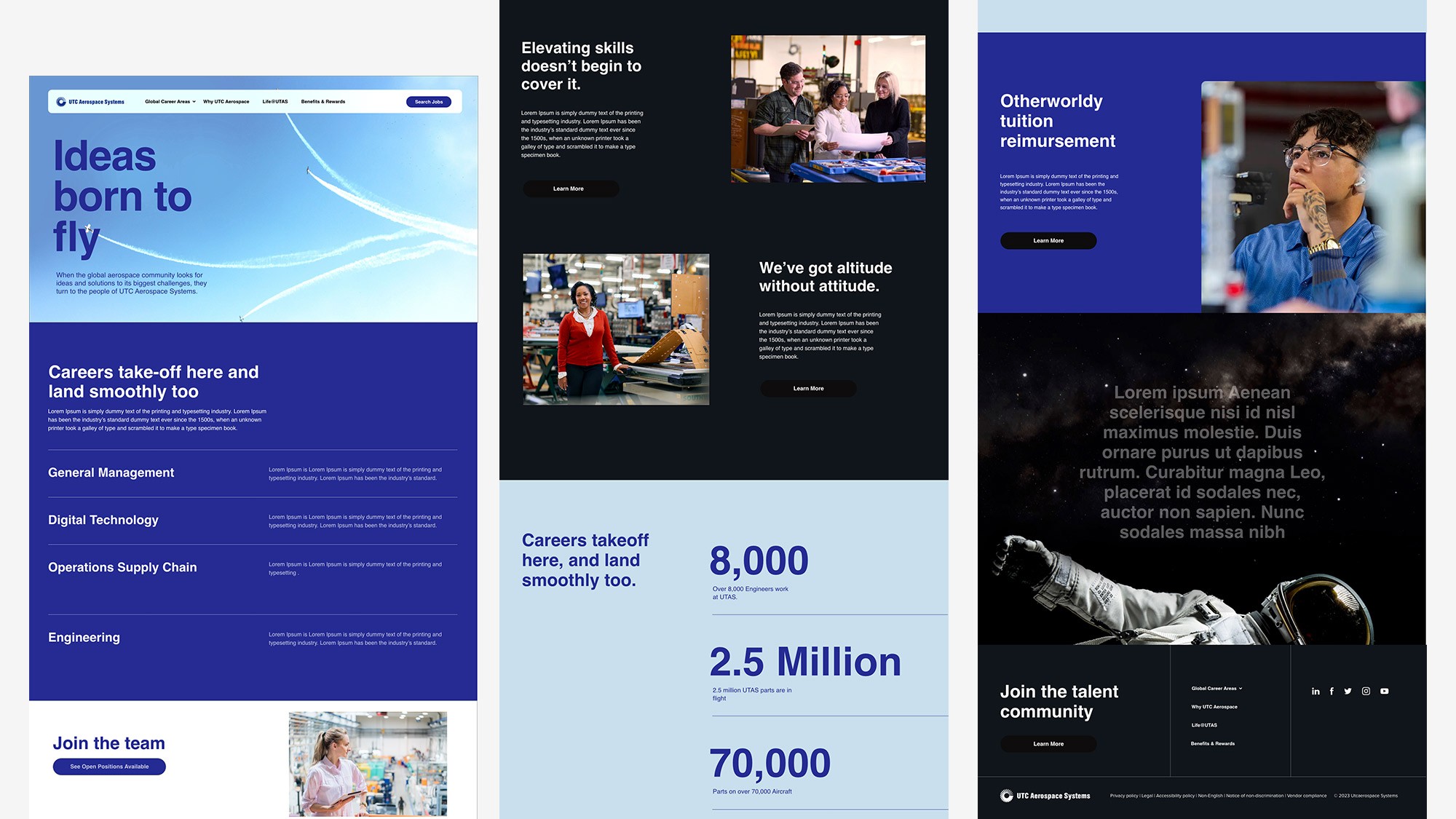
Born to fly
Focus:
Employer Brand Transformation & Value Strategy Development
Key Elements:
Decision-Dynamics Research, Creative Direction, Content Strategy, UX Design, Career Site Reinvention, Storytelling.
The Challenge
UTC Aerospace Systems supplied more than half the parts in a commercial airplane. Engines. Landing systems. Flight controls. Environmental systems. Sensors. If something kept a plane in the air, there was a reasonable chance UTAS made it. The company operated manufacturing plants, engineering centers, and offices across dozens of countries, employing tens of thousands of people in roles as different as precision machining and advanced software development.
It had grown, through acquisition and expansion, into something vast enough to lose cohesion. Different plants ran differently. Different leadership teams had built different microcultures. Different regions had developed their own norms, reward structures, and ways of operating. The company that touched nearly every commercial aircraft in the sky was, internally, a collection of disconnected entities that happened to share a parent company.
The employer brand challenge was, at its core, a unity challenge. UTAS needed to recruit globally with one compelling voice, retain talent across functions that had little reason to feel connected to each other, and surface rewards that existed but weren't reaching the people they were designed to attract. It also needed to do something harder: give people spread across five continents and a dozen business units a reason to feel like they were part of the same thing.
Finding the Insight
We started in the field. Face-to-face sessions in five countries, talking to people across roles, levels, plants, and geographies — not to test messages but to ask real questions. What did this job mean to them? What were they proud of? What did they trust? What kept them here when they could have gone somewhere else?
The microcultures were real. The differences between a manufacturing floor in Connecticut and an engineering center in the UK were real. But something else kept surfacing across all of them, consistent enough to be striking.
People took the work seriously in a specific way. Not just as a job, and not just as a career — but as something with weight. Every part had to work. There was no acceptable failure rate when the part in question was holding a plane at altitude with 200 people aboard. That shared reality — the unforgiving standard, the pride in meeting it, the quiet understanding that getting it right actually mattered — was present everywhere we went, across functions and borders and business units.
Craftsmanship wasn't a corporate value at UTAS. It was a lived one. And it was already doing the work of a unifying culture — it just hadn't been named.
The research also surfaced something hiding in plain sight: one of the most generous tuition assistance programs in American industry. Any UTAS employee could pursue an advanced degree, fully paid for by the company. The program was real, substantial, and almost entirely unknown outside the organization. A benefit designed to attract and retain ambitious people was reaching almost none of them.
The Strategy
a credible single voice in the talent market, and articulate a sense of purpose that could live across every function in the business — machining, engineering, software, operations, finance, and everything else.
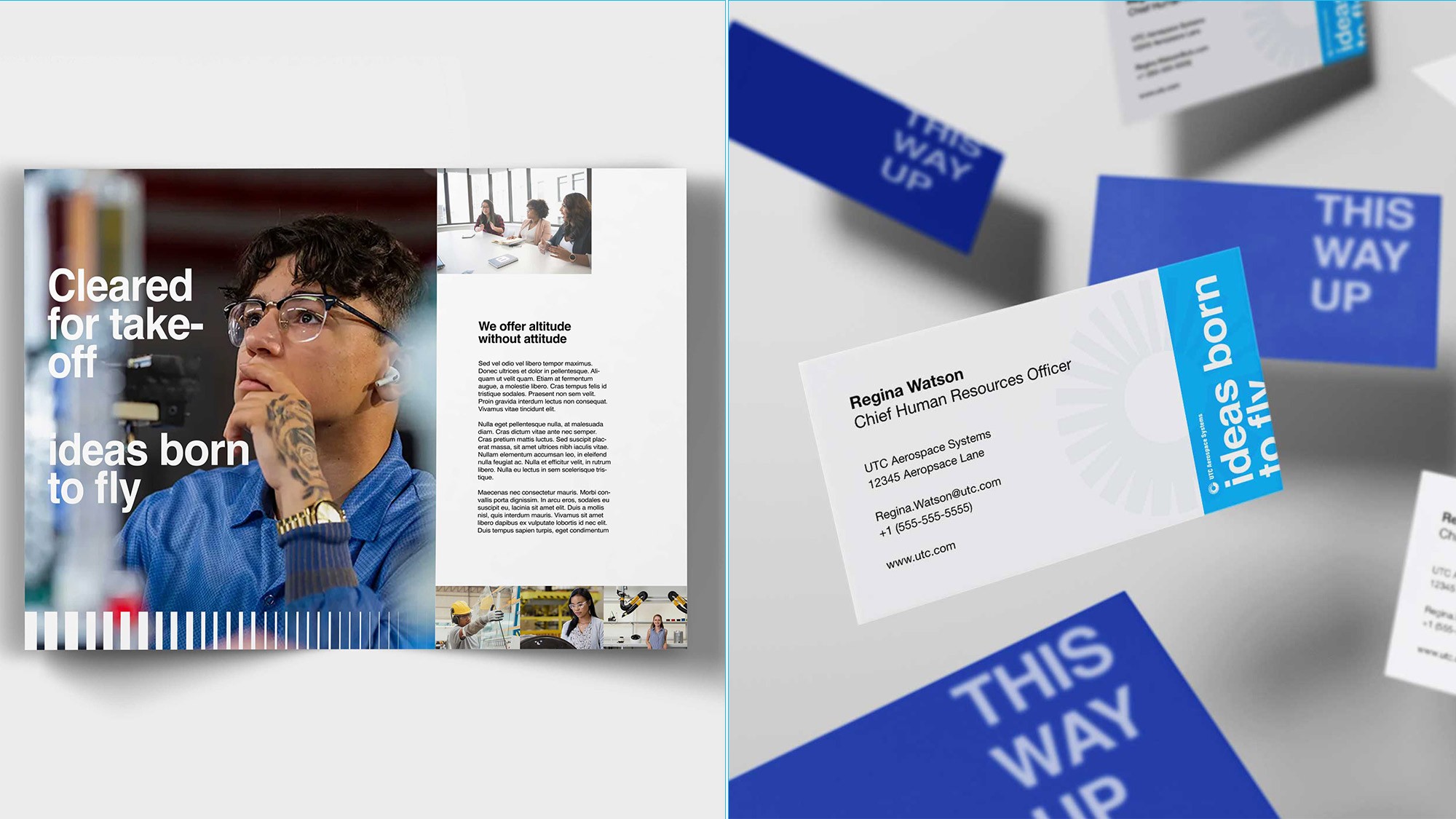
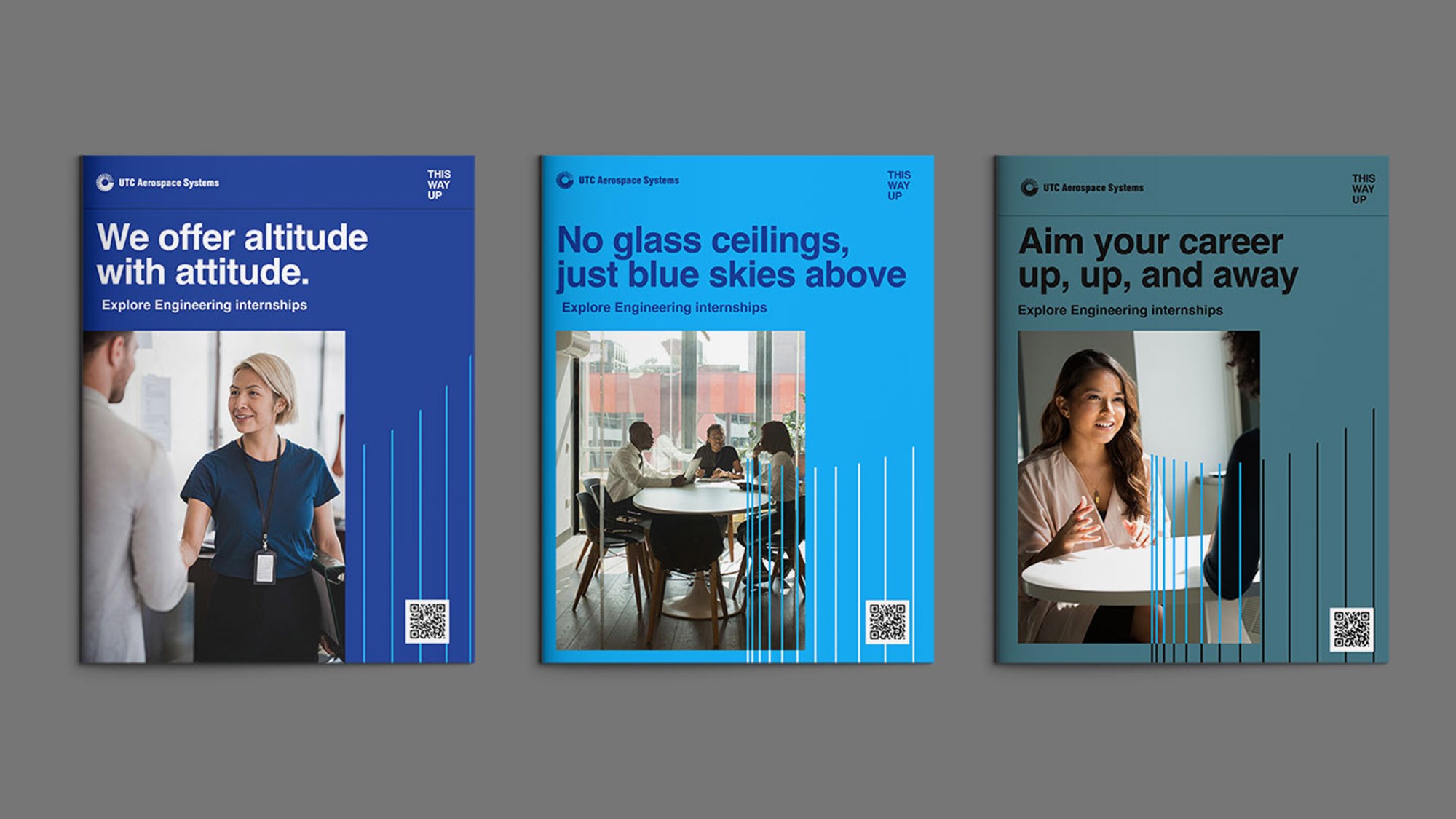
Born to fly
The line worked because it wasn't aspirational. It was descriptive. UTAS people weren't working toward flight — they were already in the business of making it possible, every day, at every level of the organization. The machinist who held tolerances measured in thousandths of an inch was born to fly. The engineer who spent three years certifying a single system component was born to fly. The person who made sure the space suits for NASA's astronauts met every spec was born to fly.
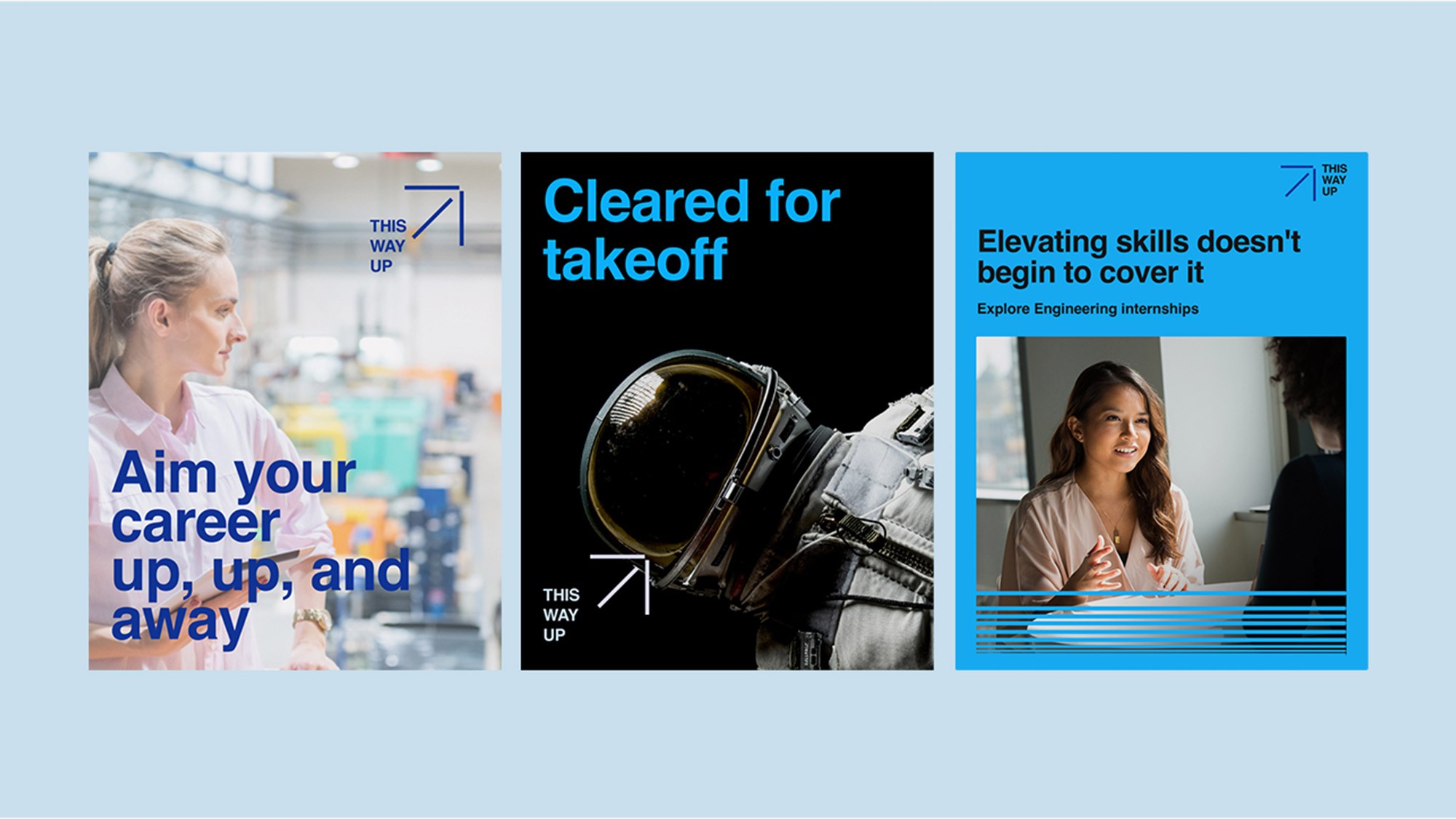
That last point mattered more than it might seem. UTAS had manufactured the pressure suits worn by NASA astronauts — an extraordinary credential that the company had never meaningfully used in its employer narrative. The positioning gave it a home. It was exactly the kind of story Born to Fly was built to tell.
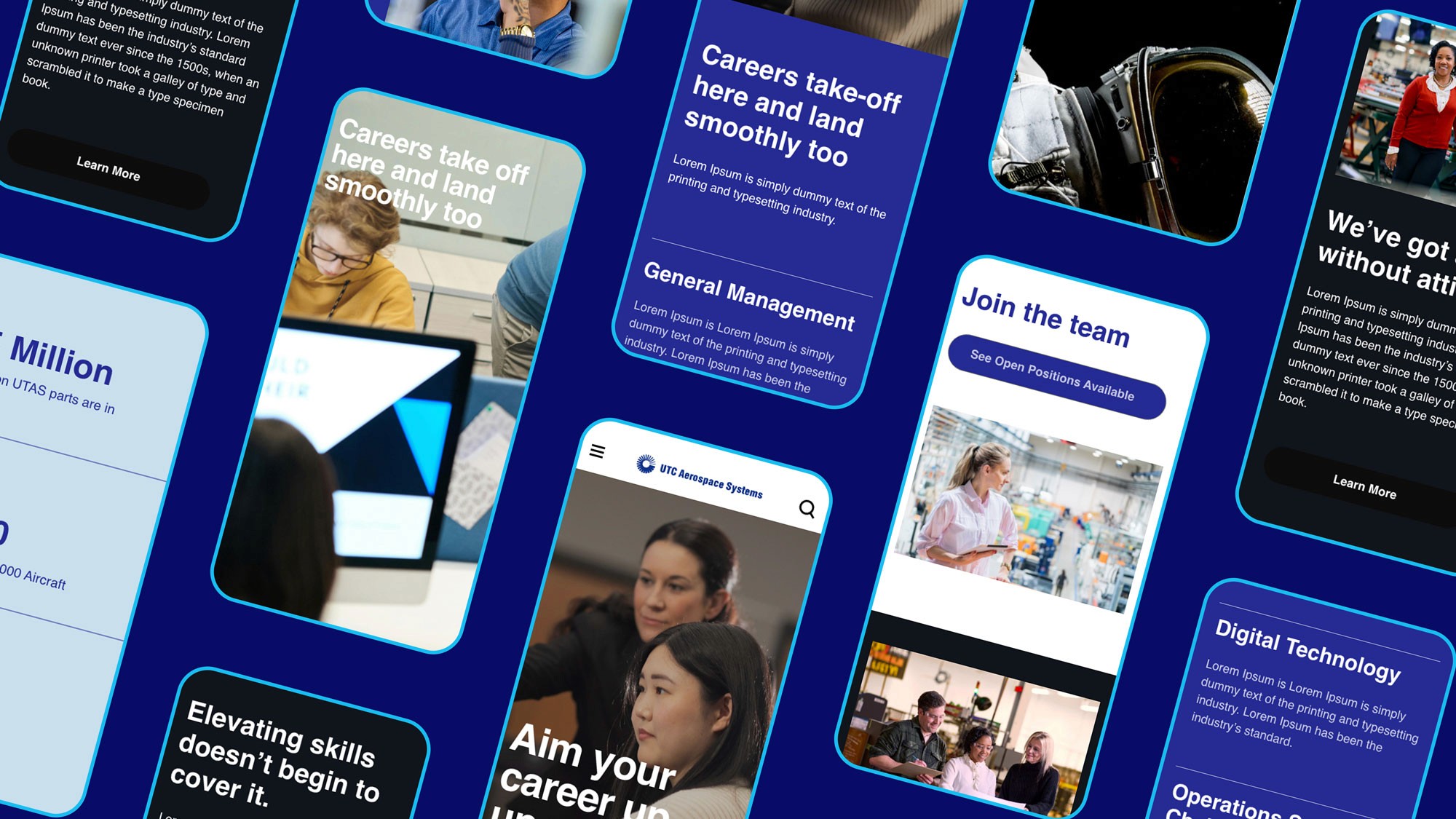
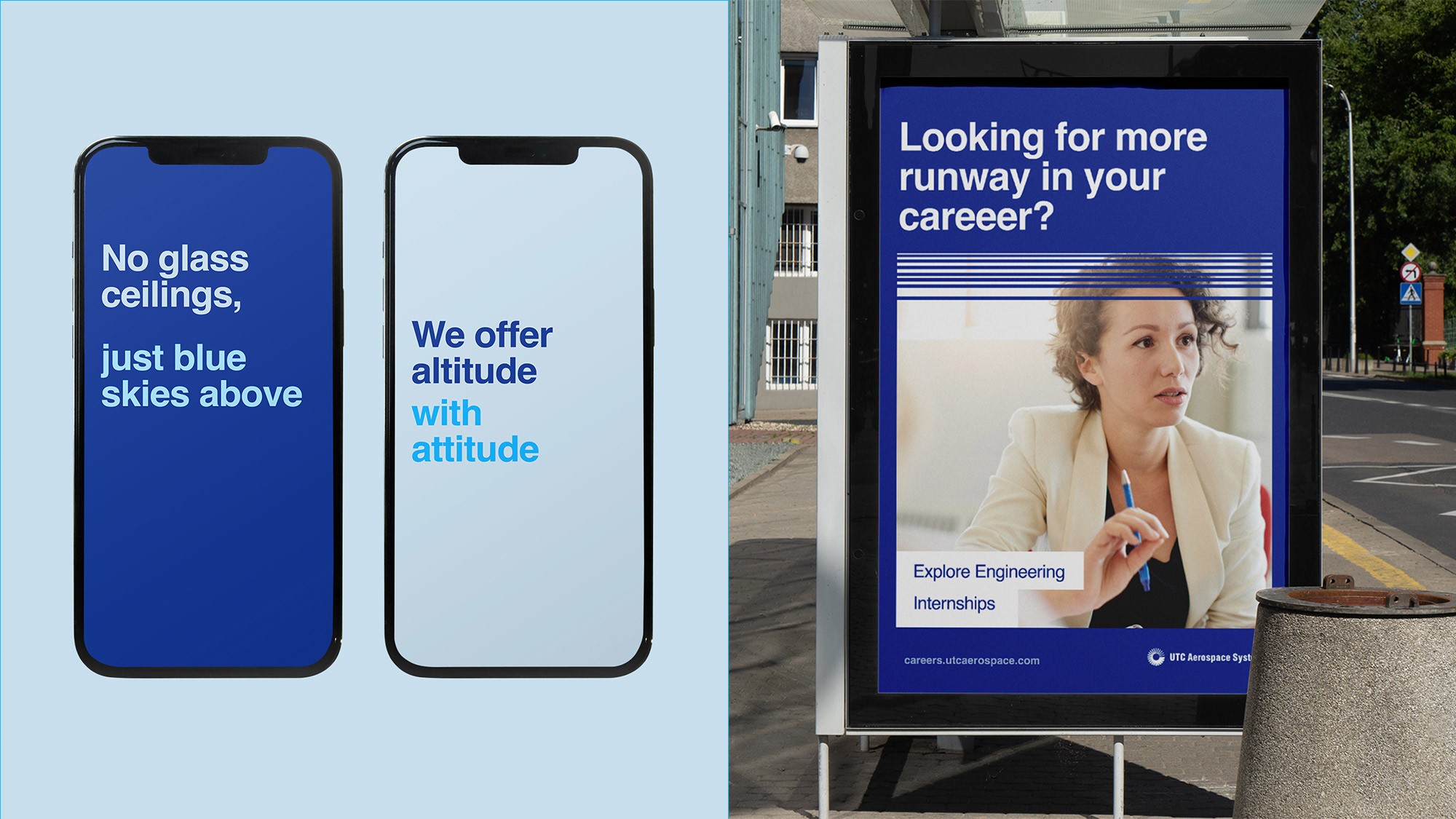
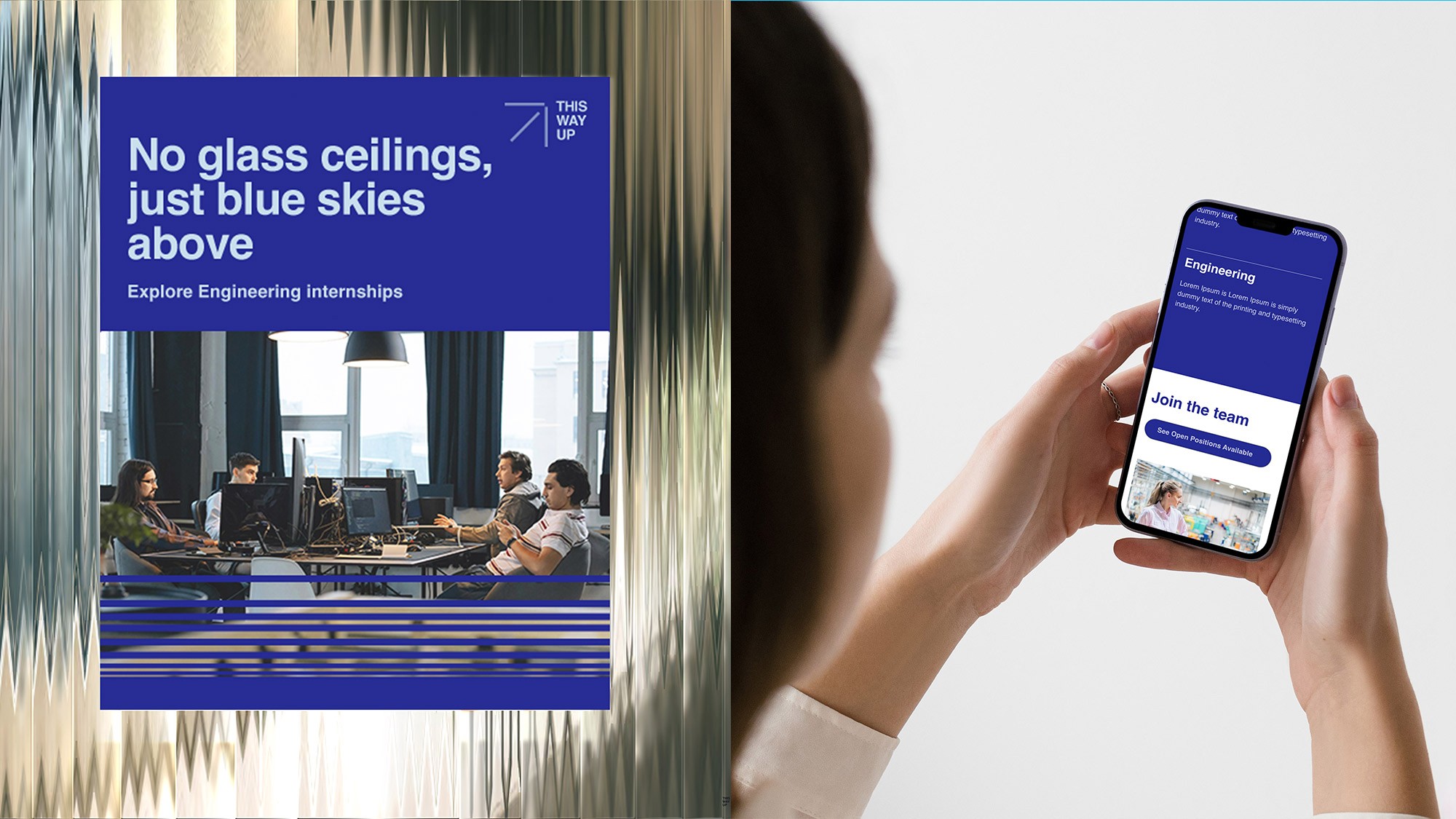
Activation centered on brand experience and trust — not claims but evidence. The visual system was built around flight itself: custom iconography derived from the forms, mechanics, and precision of aerospace. The language of the brand reflected the people: direct, grounded, proud without being boastful.
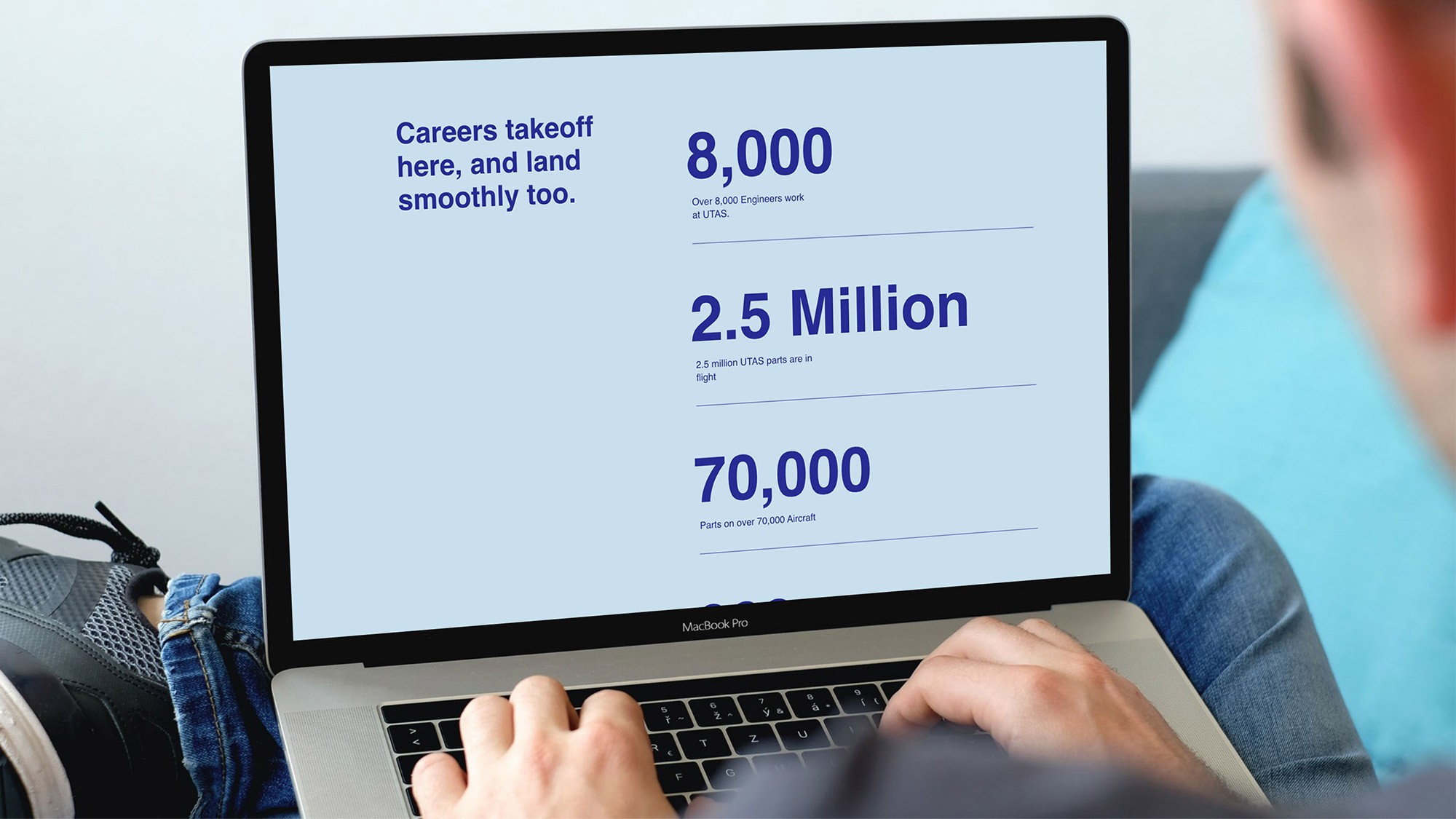
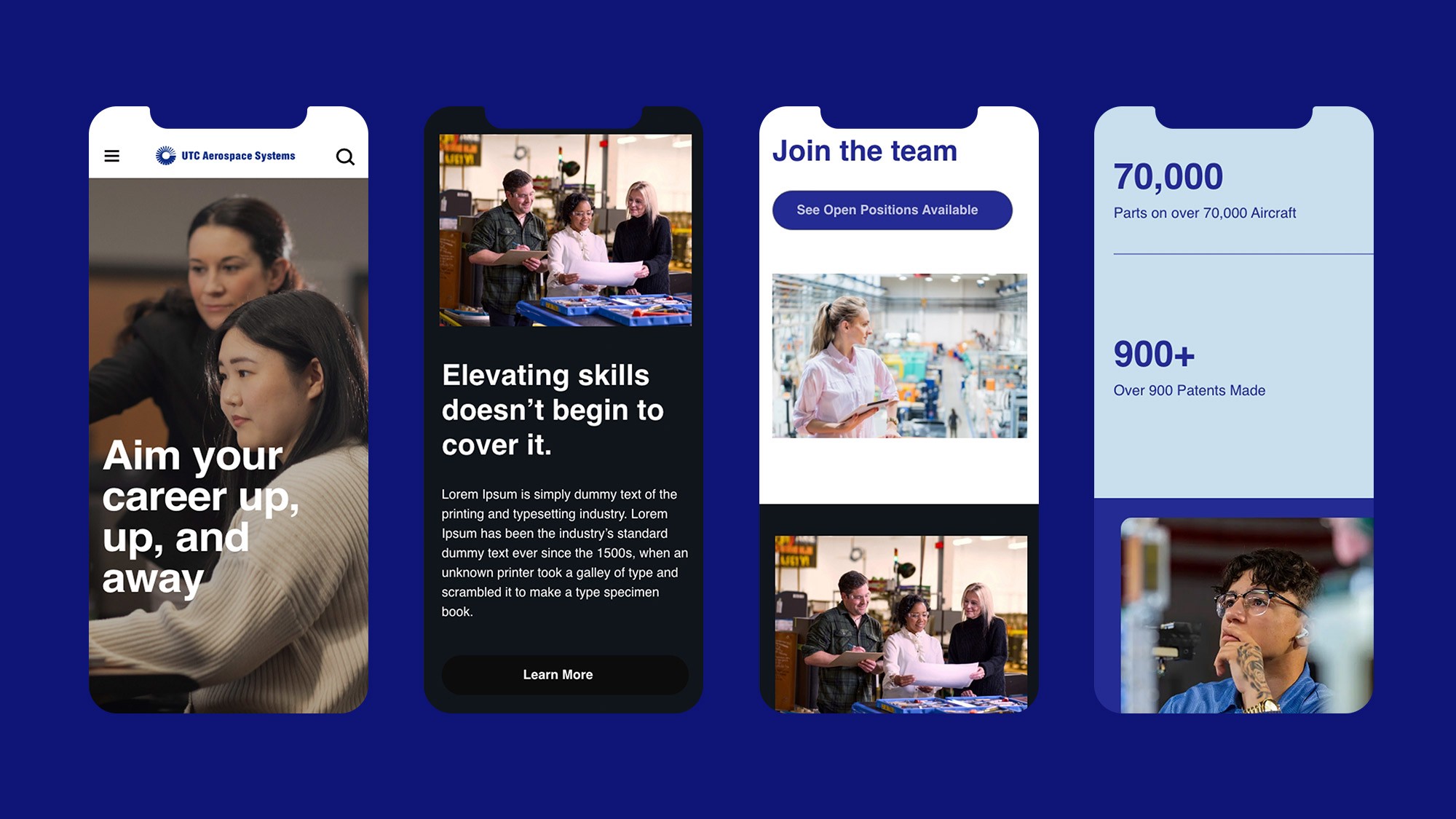
What We Built
The content strategy was built around the people themselves. We returned to the field — this time with cameras — and filmed employee interviews across five countries. The approach mixed individual sessions with group on-camera conversations that brought people from different roles, backgrounds, and geographies into the same room. Those group sessions became something unexpected: dynamic, genuine exchanges where people's personalities and experiences played off each other in ways a solo interview can't produce. The result was content that felt real because it was.
The story architecture surfaced what had been invisible: the tuition program, the NASA connection, the craftsmanship standard, the breadth of career areas that most people never associated with an aerospace supplier. UTAS made parts for commercial aircraft, military systems, business aviation, and space. That range was itself a recruiting asset — it meant a career at UTAS could go in directions that few single-industry employers could match.
The brand system was designed to give regional teams and individual plants the tools to express the positioning consistently without requiring central approval on every execution — a practical necessity for a company operating at UTAS's scale across markets with different talent dynamics, languages, and competitive conditions.
The Result
UTAS entered the engagement with a fragmented employer identity and a workforce that had never been given language for what it already had in common. It left with a platform built on the thing that was already true across every plant, every function, every country: an uncompromising pride in work that has to be right because the stakes of getting it wrong are real.
The positioning gave disconnected cultures a shared identity without flattening what made each of them distinct. It gave talent market segments a reason to consider a company they had never thought of as a career destination. And it gave UTAS's own people language for what they had always felt but never had a way to say out loud.