
Paychex
Who says Rochester isn't a cool place to work?
Focus:
Employer Brand Transformation & Value Strategy Development
Key Elements:
Decision-Dynamics Research, Creative Direction, Content Strategy, UX Design, Career Site Reinvention, Storytelling.
Paychex was founded on a story most technology employers can't tell. At seventeen, founder Tom Golisano watched his father be berated by his boss and made a decision: if he ever ran a company, that would never happen. Dignity, respect, equal opportunity — not values on a wall, but the operating principles that built an S&P 500 company from $3,000 and a firm belief in treating people well.
The problem was that none of that was visible to the engineering talent Paychex needed most. Technology professionals scanning the market were thinking San Francisco, Seattle, Austin — the zip codes that had come to signal ambition and career momentum. Paychex, headquartered in Rochester, was competing for serious engineering talent from a position of near-invisibility, despite having genuinely exceptional things to offer.
The initial scope was focused: build a microbrand for the IT organization specifically. A dedicated employer brand effort to reach technology professionals and make a credible case for Paychex as a place worth choosing. IT represented the majority of hiring. Getting this right mattered at scale.
Finding the Insight
Deep surveying, one-on-one interviews, and workshops with engineers across teams, tenure levels, and technical disciplines surfaced something that reframed the entire approach — and it started with a simple observation.
No one ever asks engineers about their work.
Every recruiter conversation, every career site, every employer brand effort in the industry asked about culture, work-life balance, mission. Engineers answered because they were asked, not because those were the things they actually wanted to talk about. Ask an engineer what they're building, what problem they're solving, what tool they chose and why — and something different happens. They light up. The answers get specific, technical, enthusiastic, and completely unguarded.
The research also produced six findings that challenged standard assumptions about what technology professionals actually value:
It's not the cool project; it's the inspiring boss. It's not the advanced tech; it's the freedom to choose tools — that's how tech builds skills. It's not the zip code; it's the zip code inside the building. It's not the stock options; it's the empathy in total rewards. It's not the charge to innovate; it's not having to fight information silos and fiefdoms to do so. It's not the next new thing; it's feeling empowered to solve any problem in new ways.
Six counterintuitive truths derived directly from what Paychex engineers said mattered in practice. Autonomy, leadership quality, psychological safety, freedom to build without bureaucratic friction — Paychex had all of it. It just hadn't been saying so in the language engineers actually speak.
The Strategy
Speak Tech to Tech. Engineers are precise, skeptical of hype, and deeply passionate about their craft. The brand had to earn that audience, not perform for it.
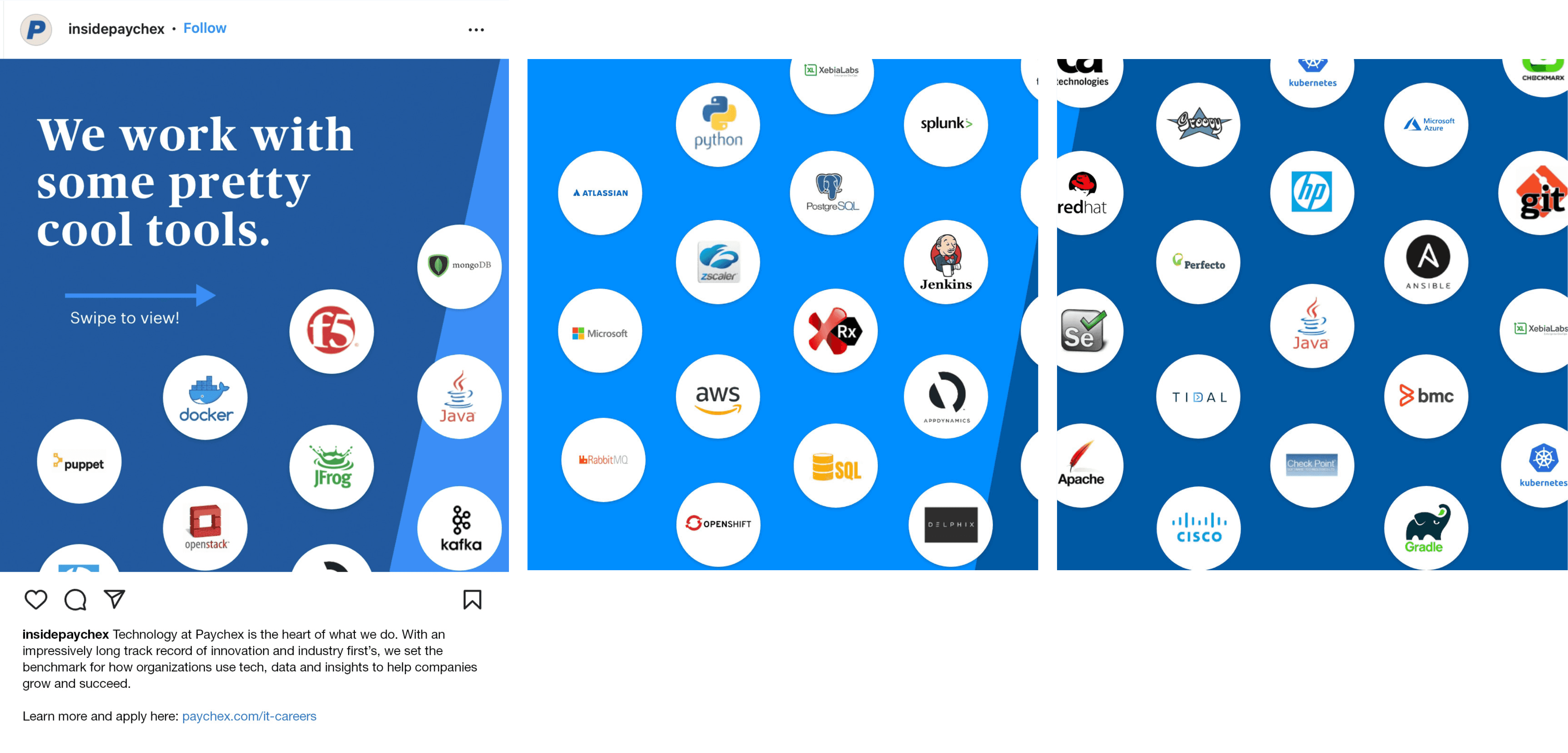
Give engineers a platform to talk about their actual work. Not culture. Not benefits. Not work-life balance. What they were building, what problems they were solving, why a particular technical choice made sense. For an audience that thinks about their craft constantly and rarely gets asked about it directly, that was the invitation the brand had been missing.
The campaigns followed the same logic. Technical, specific, honest — built for an audience that would immediately detect anything that felt like marketing dressed up as engineering conversation.
What We Built
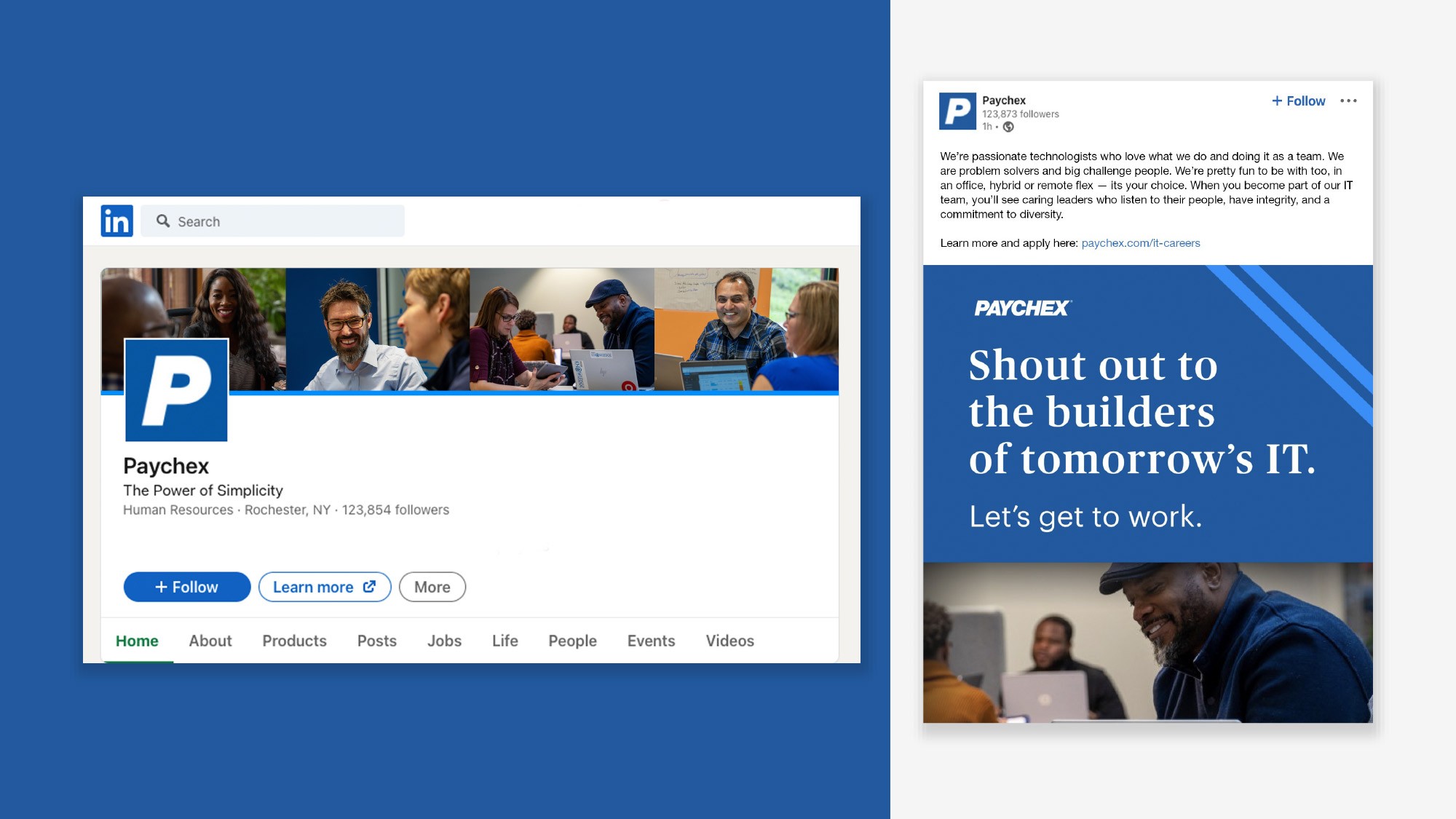
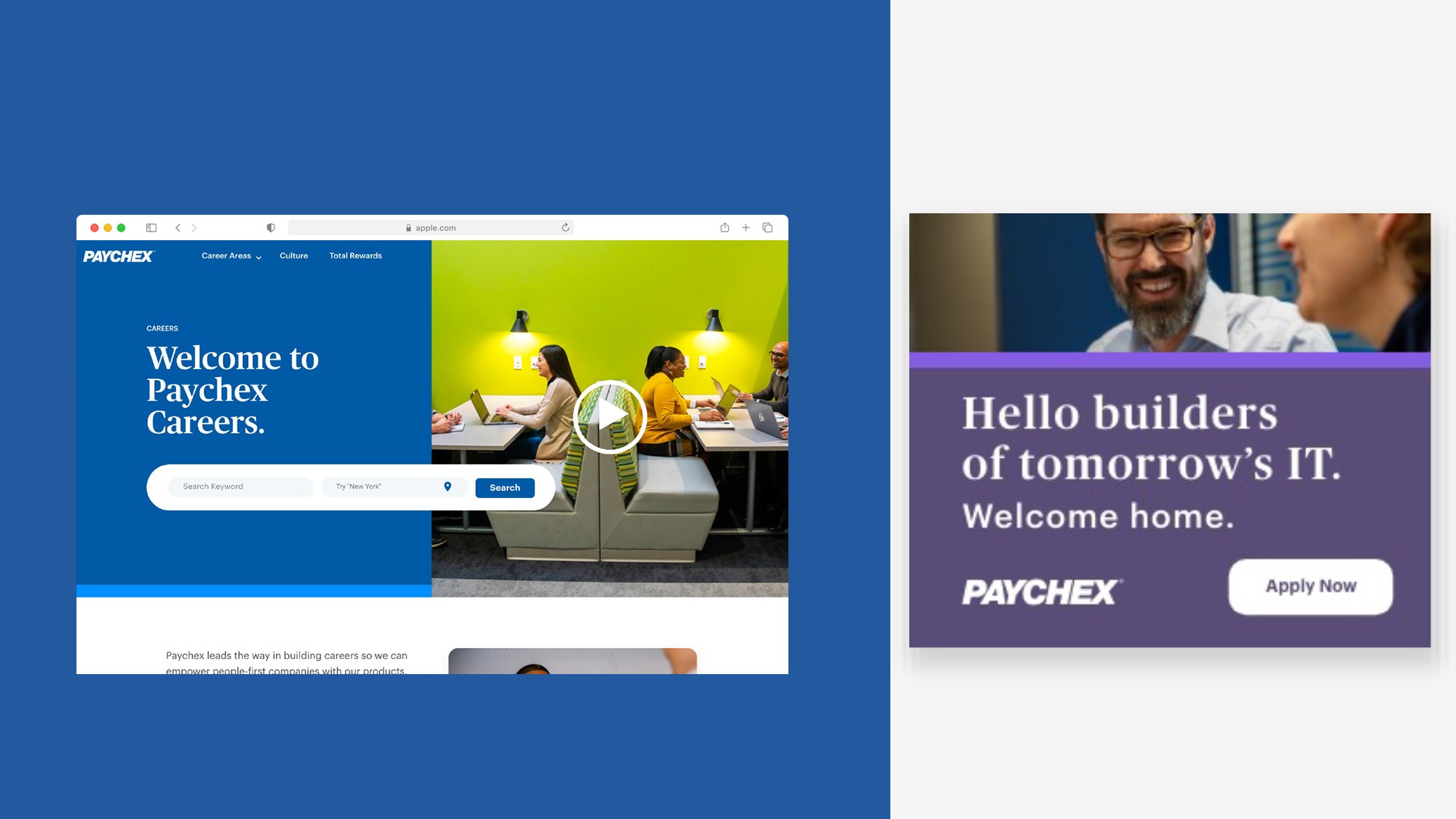
The IT microbrand launched as a dedicated experience for technology candidates — its own navigation, its own voice, its own visual identity. That last part required a conversation with marketing. The existing Paychex corporate brand palette didn't give IT the distinctiveness it needed to signal a specific culture to a specific audience. The case was made, and marketing agreed to extend the brand palette — adding colors that gave IT its own visual presence within the Paychex system without breaking from it.
Engineers created UGC video speaking directly about what they were working on. No scripts, no talking points — just engineers being engineers about problems they found genuinely interesting. One engineer went further, building a short animation in C++ and JavaScript that ran live on the site. The work, literally, became part of the brand.
The hero said it plainly: Hello builders of tomorrow's Information Technology. Welcome home. Real engineers, named, on camera, on the first screen. The message and the medium were the same thing.
The Result
The IT microbrand performed well enough that Paychex asked to extend the voice, look, and feel across their full enterprise careers site. A project scoped for one function became the creative and strategic foundation for the entire organization's employer brand.
When the work earns expansion, the case has been made. For Paychex, it meant a technology employer brand that finally reflected the reality of working there — serious engineering, genuine autonomy, a culture built on the belief Tom Golisano formed at seventeen watching his father get dressed down at work.
That story was always there. It just needed someone to tell it in a language engineers would actually believe.