Johns Hopkins University Applied Physics Laboratory
Rising to the Challenge
Focus:
Employer Brand Transformation & Value Strategy Development
Key Elements:
Decision-Dynamics Research, Creative Direction, Content Strategy, UX Design, Career Site Reinvention, Storytelling.
The Challenge
The Johns Hopkins University Applied Physics Laboratory is one of the most consequential science and technology organizations in the world. Missiles, satellites, spacecraft, cybersecurity systems, biomedical devices — APL works on problems at the frontier of what's technically possible, for clients that include the Department of Defense, NASA, and intelligence agencies whose names don't appear on the deliverables.
And almost nobody in the talent market knew it existed.
APL operates as a separate entity within Johns Hopkins University — with its own sprawling campus and facilities miles from the academic institution, running its own research programs, employing thousands of scientists, engineers, and technologists on work that is as serious as it gets. But to students and early-career professionals scanning the market, it read as a black box. Something academic. Something obscure. Something that couldn't possibly compete with the pull of Silicon Valley, Google, Apple, or the marquee engineering firms whose names everyone recognized.
The result was a talent pipeline that consistently underperformed relative to the quality of the work happening inside. Candidates who would have found APL extraordinary never considered it. Those who stumbled onto it didn't know what to make of it.

The Challenge of Telling the Story
The strategic problem was straightforward. The executional problem was not.
We went on-site to photograph the facility, the people, the culture, and the energy. The photography brief for one of the country's most advanced applied science laboratories ran into an immediate reality: most of it was restricted. Classified programs, secured areas, work that couldn't be documented, shown, or described in public-facing materials. The visual language of the campaign had to be built around what could be shown — which required both creative ingenuity and a willingness to work within constraints that most brand programs never encounter.
That constraint, it turned out, was itself part of the story. The work APL does is serious enough that you can't show most of it. That's not a liability. For the right candidate, it's the most compelling thing about the place.
The Strategy
Position APL as the career destination it actually was — not an academic backwater, not a government bureaucracy, but the kind of place where the really big science happens behind doors most people never get to open. Where the problems are hard enough to matter, and the resources exist to solve them. Where a career means working on things that most engineers and scientists will never get near.
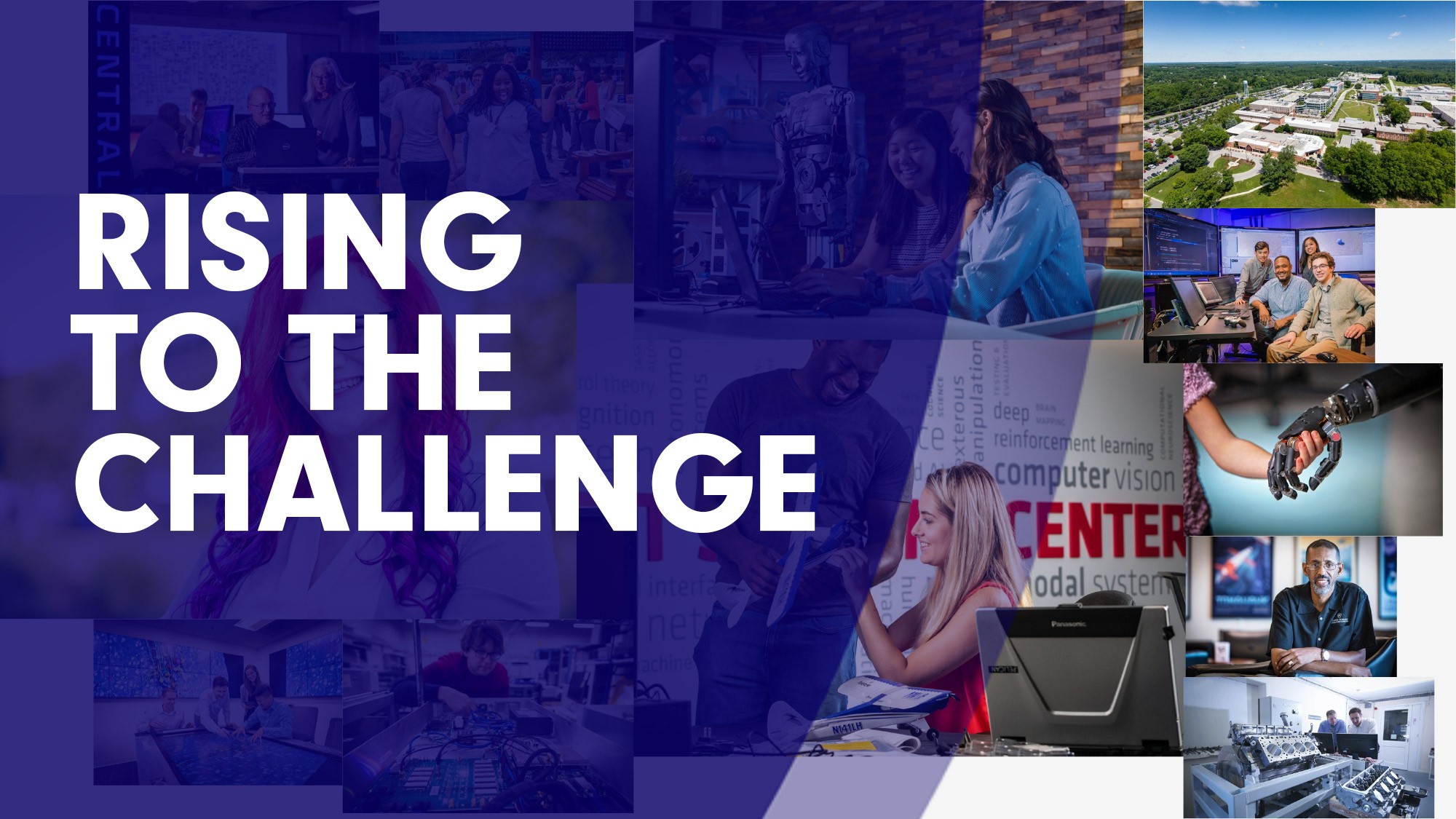
Rising to the Challenge captured that spirit directly. A nod to the classified nature of the work, a signal to the kind of talent that chooses difficulty on purpose, and a positioning line that separated APL from every generic employer brand in the engineering and technology space.
The audience was dual: students who needed to see APL as a legitimate career destination rather than a strange institutional footnote, and experienced professionals who needed to understand that this was serious applied science, not academic research, and not corporate engineering.
What We Built
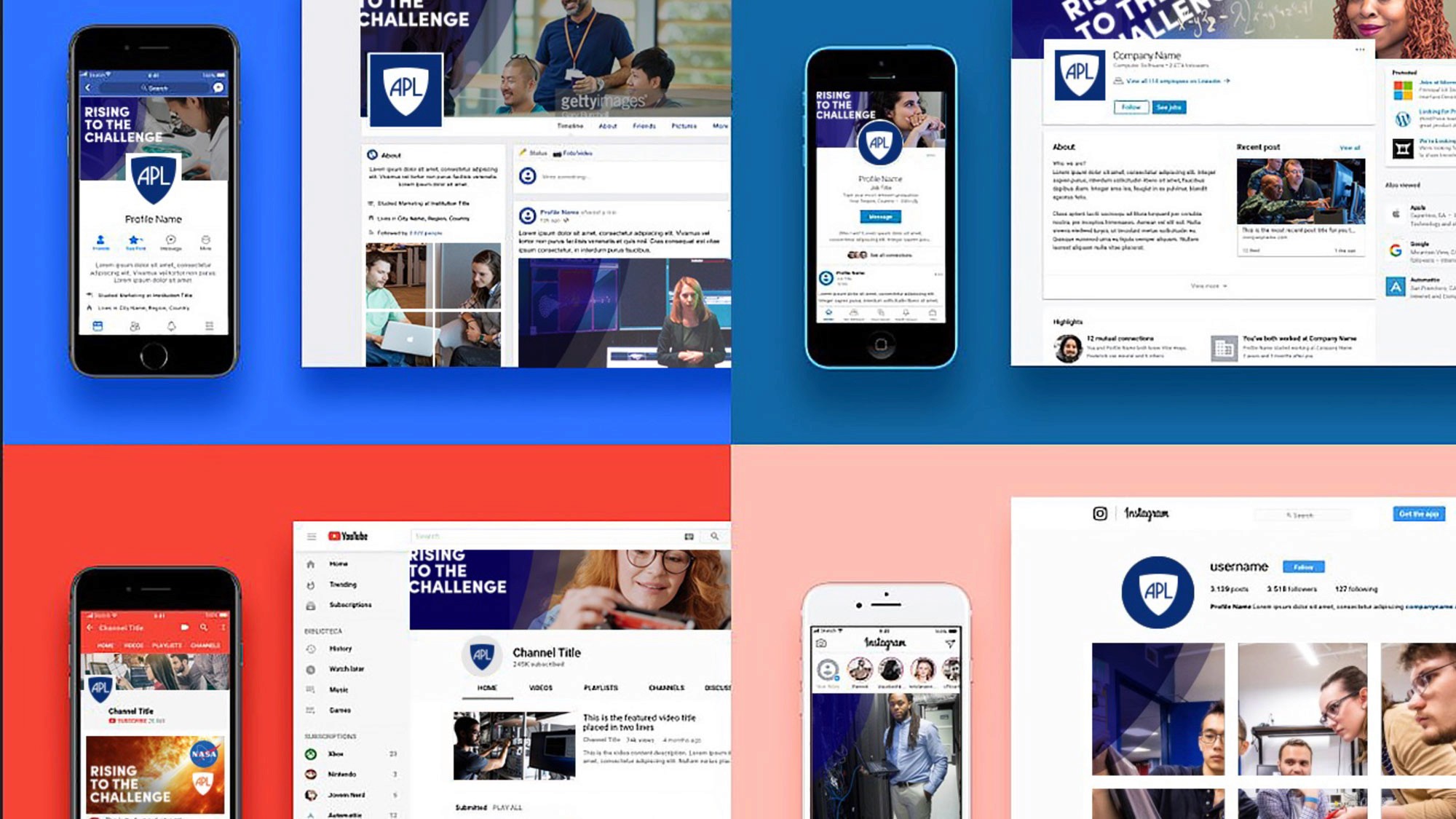
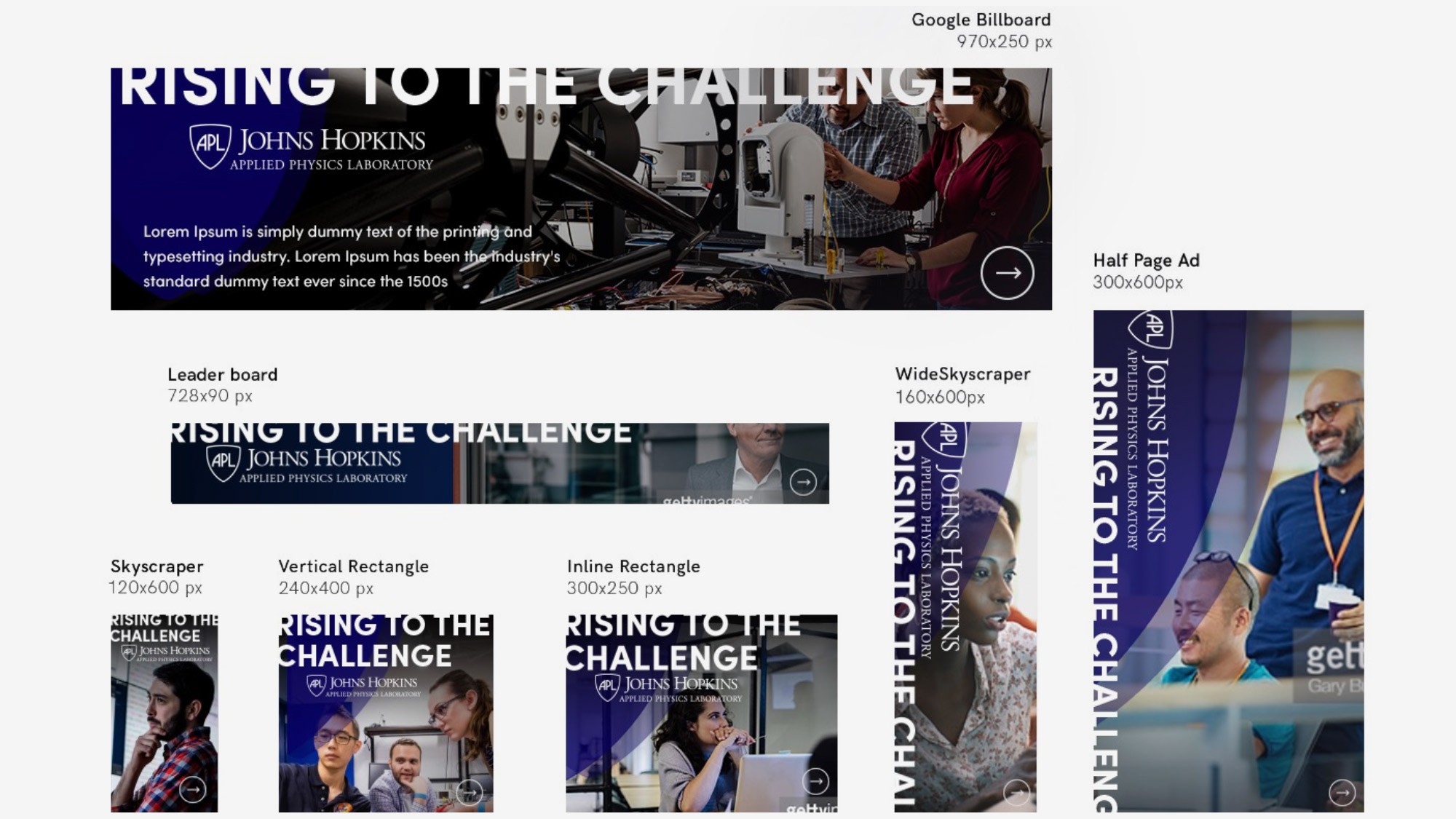
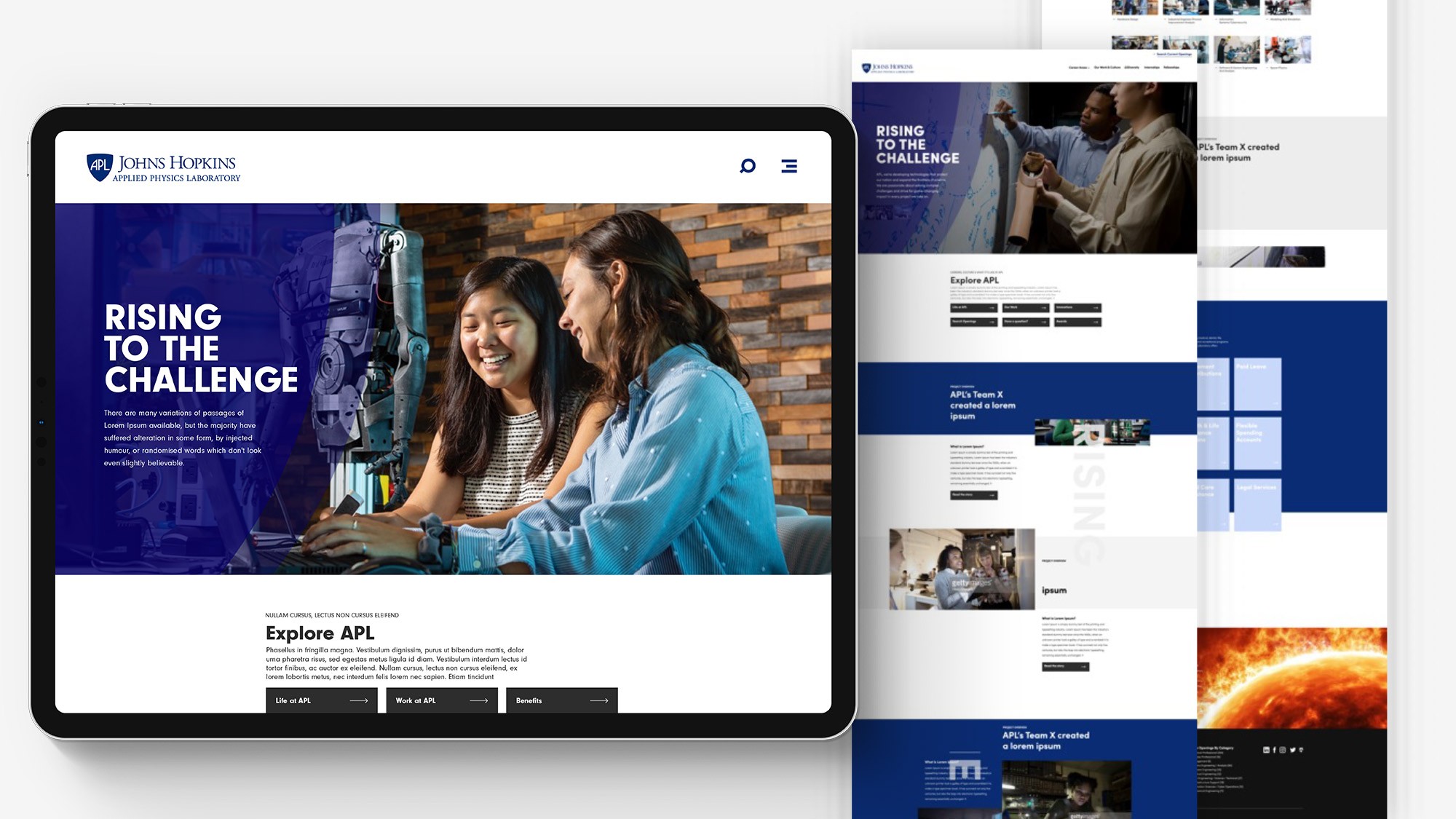
A reinvented career site focused on compelling stories that connected people and their energy to their extraordinary work. A full social channel activation — Facebook, LinkedIn, YouTube, Instagram — with a consistent visual system built around the APL shield, bold primary color blocking, and the Rising to the Challenge campaign line across every touchpoint. The imagery balanced what could be shown — real researchers, real work environments, real people engaged in the intensity of the mission — with a visual language energetic enough to compete for attention against the Silicon Valley brands APL was losing candidates to.
The prior presence had been academic in look and feel, low in energy, unconvincing as a career destination. The new system was none of those things. It was built to stop a scroll, signal seriousness, and make a candidate ask a question they hadn't thought to ask before: what exactly is happening inside that building?
The Result
Metrics were not allowed to be shared. What was delivered was a brand presence finally proportionate to the work — a storytelling platform that made APL's value proposition clear, compelling, and credible to audiences who had never thought to consider it. The prior presence wasn't converting because it wasn't asking the right question of the right people in the right way. This one was.
For an organization doing some of the most consequential science and technology work in the country, being known for it — even partially, even carefully, within the bounds of what can be shared — is not a small thing. Rising to the Challenge was the beginning of that.