
Jabil
The most advanced tech company you never heard of
Focus:
Employer Brand Transformation & Value Strategy Development
Key Elements:
Decision-Dynamics Research, Creative Direction, Content Strategy, UX Design, Career Site Reinvention, Storytelling.
The Challenge
Jabil operates in nearly 30 countries, employs more than 135,000 people, and generates close to $28 billion in global revenue. It manufactures some of the world's most sophisticated and recognizable products — medical devices, consumer electronics, advanced industrial components — for clients whose names are household words everywhere on earth.
Jabil itself is not.
That invisibility was by design, built into the nature of contract manufacturing. Client confidentiality is the business model. But in the war for global technology talent — engineers, software developers, advanced manufacturing specialists — invisibility has a cost. Competitors with recognizable names and established employer brand reputations were winning candidates before Jabil ever entered the conversation. Recruitment costs were climbing. TA metrics were unfavorable, and retention was an all-out war. And the awareness gap was widening against a peer group that was increasingly vocal about who they were and why talented people should care.
The challenge was fundamental: build an employer brand powerful enough to compete for world-class talent without being able to say what you actually make or who you make it for.
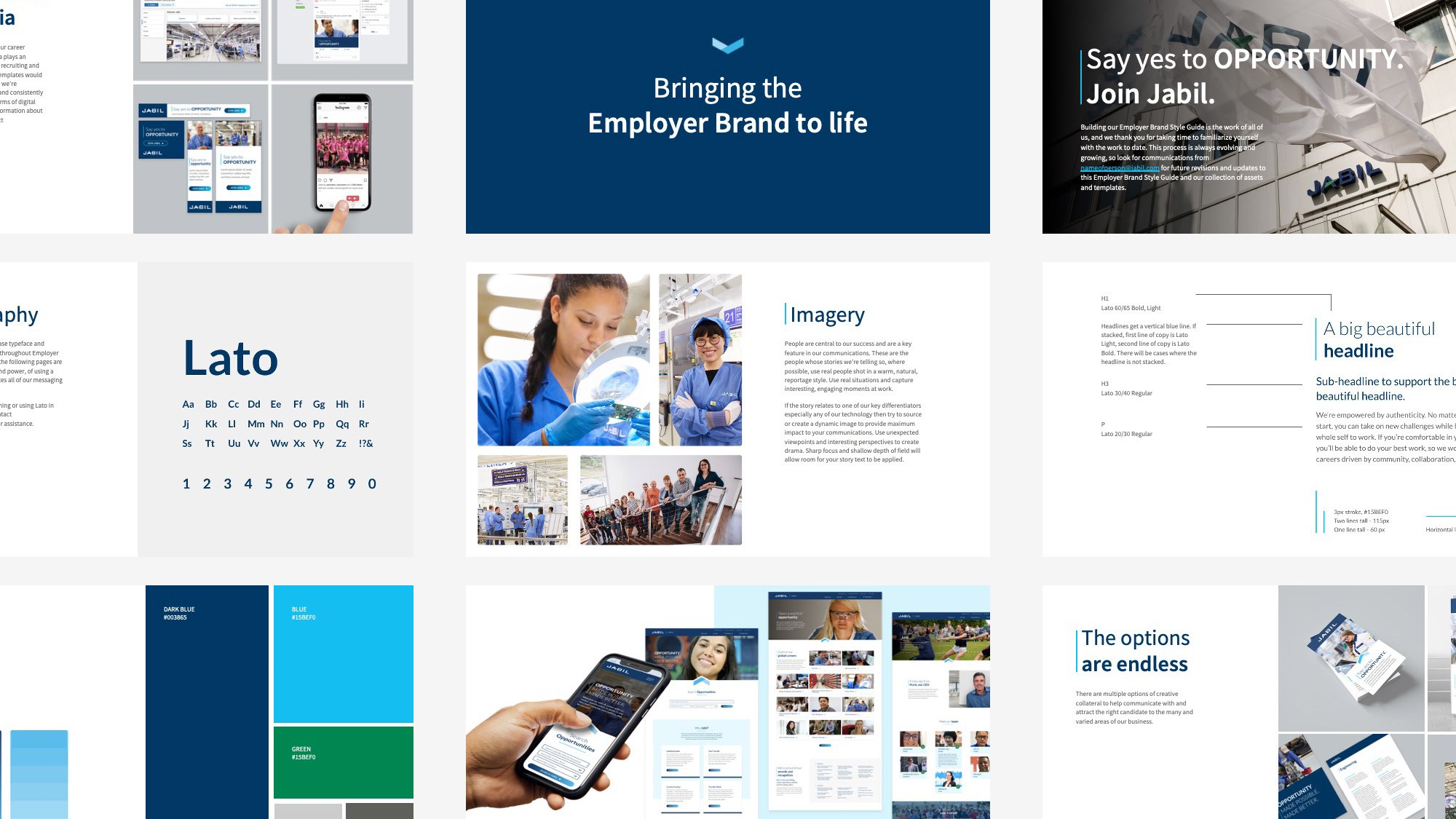
Finding the Insight
Jabil had conducted substantial internal research — employee interviews, manager feedback, exit interviews — in the year prior to engaging us. We analyzed that data alongside our own independent audience research, mapping decision drivers, memorability factors, and what we call career scorecards — how candidates and employees evaluate value over time, not just at the moment of hire.
A pattern emerged that reframed the entire challenge.
The primary reasons people joined Jabil were nearly identical to the primary reasons they left. That's not a culture problem. That's an expectation problem. What people were told — or not told — during recruiting and onboarding didn't match what they experienced as their careers developed. The gap wasn't in the reality of working at Jabil. It was in how that reality was communicated, or wasn't.
Digging deeper, we found the divergence point: somewhere between the third and fourth year of employment, the experience shifted. Jabil's work cell model — a project-based way of organizing talent around specific engineering and technology challenges, assembling specialists the way a film production assembles a crew, then reconfiguring for the next project — became genuinely extraordinary for people who understood it and had time to grow within it. Careers accelerated. Expertise compounded. The collaborative model produced work that few employers could match.
But nobody was explaining that upfront. New hires arrived without a map. The first few years felt disorienting rather than exciting, and many left before the model had a chance to deliver on its actual promise.
The insight was twofold: Jabil was invisible to the outside world, and misunderstood from the inside. Both problems had the same root cause — a company that had never learned to tell its own story.
The Strategy
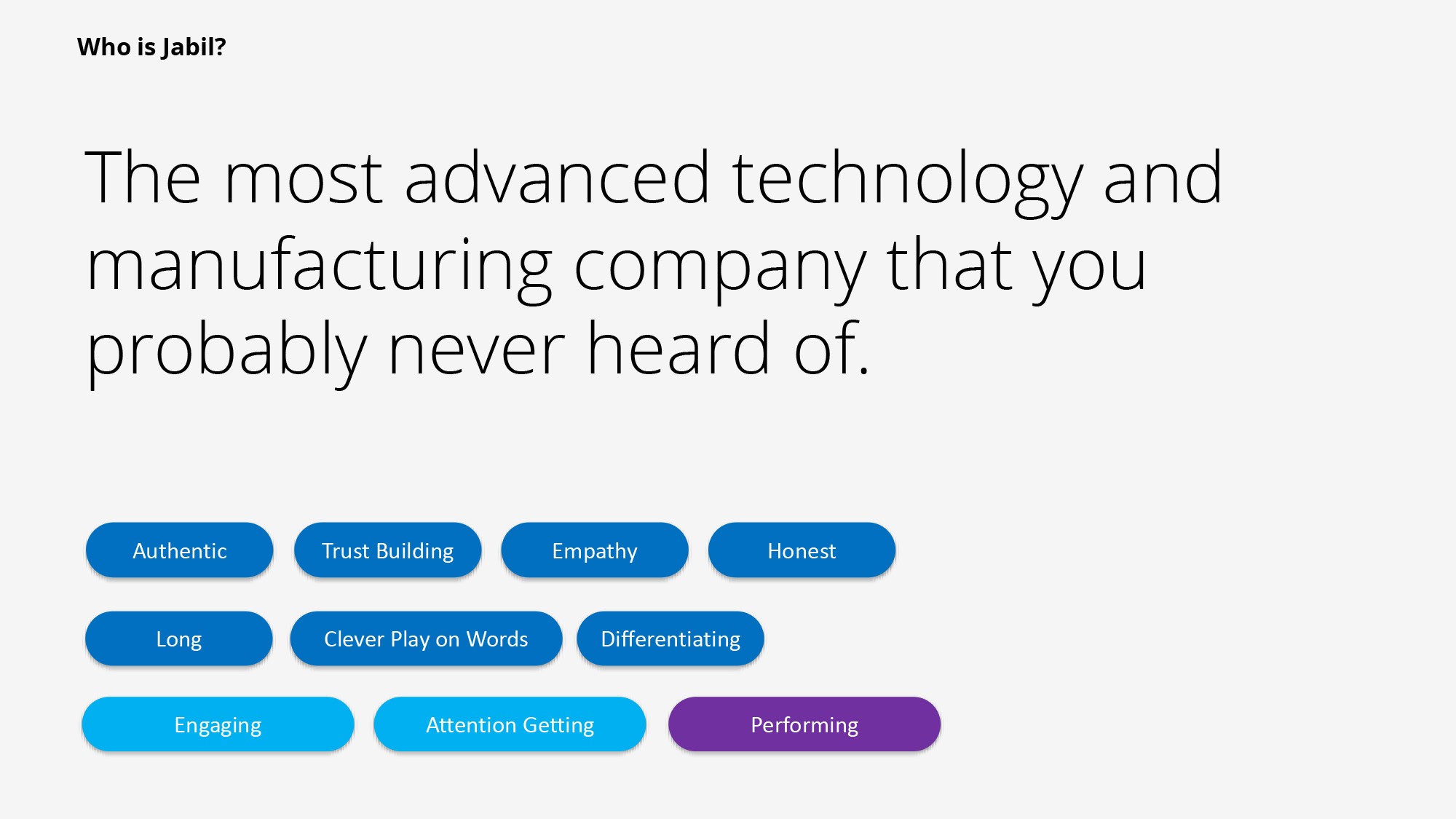
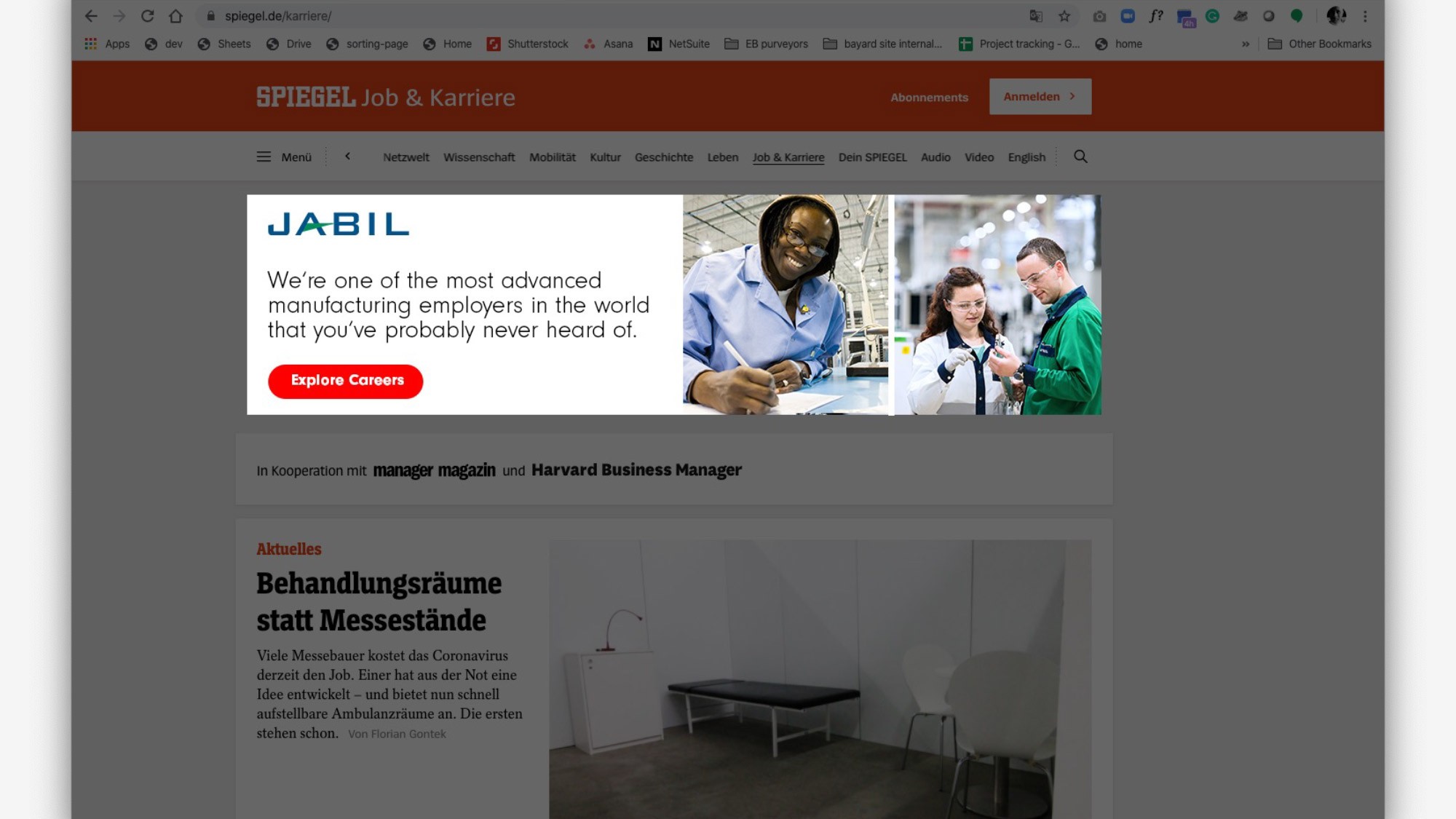
We won the engagement with a positioning line that said exactly what needed to be said: The most advanced technology company you never heard of. It acknowledged the awareness gap directly, turned obscurity into intrigue, and invited the right kind of talent to lean in rather than scroll past.
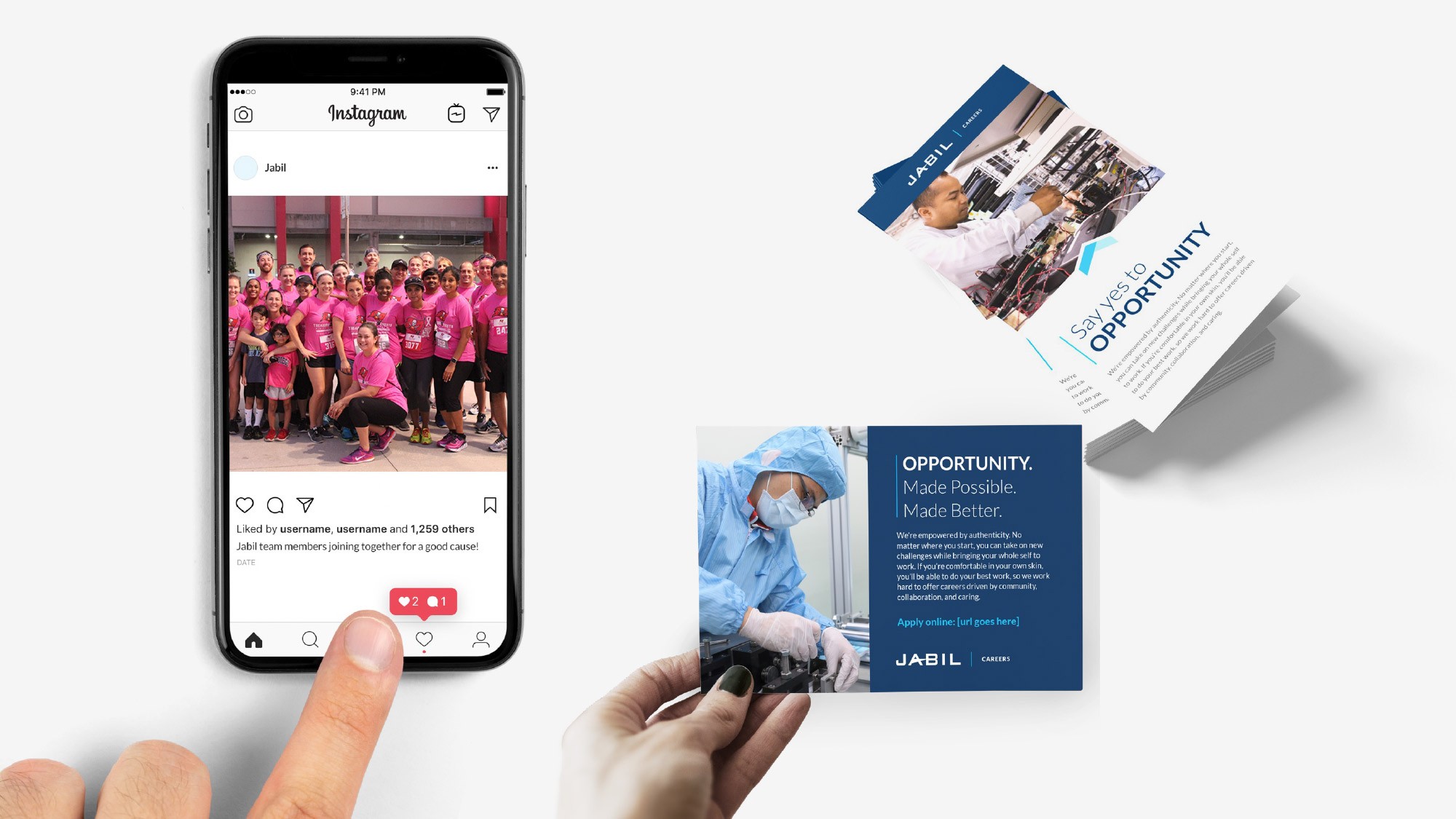
The client's appetite for that level of directness proved limited. The line was softened. What remained — Opportunity Made Possible. Made Better. — captured the spirit of the invitation without the edge. It pointed toward a brand experience organized around exploration and growth, laddering from initial awareness through the full arc of a career at Jabil, with particular emphasis on what the work cell model made possible after the critical acclimation period.
The strategic imperative was clear: set honest expectations early, explain the model in plain language, and give candidates and new hires a reason to stay long enough for Jabil's way of working to reveal itself.
What We Built
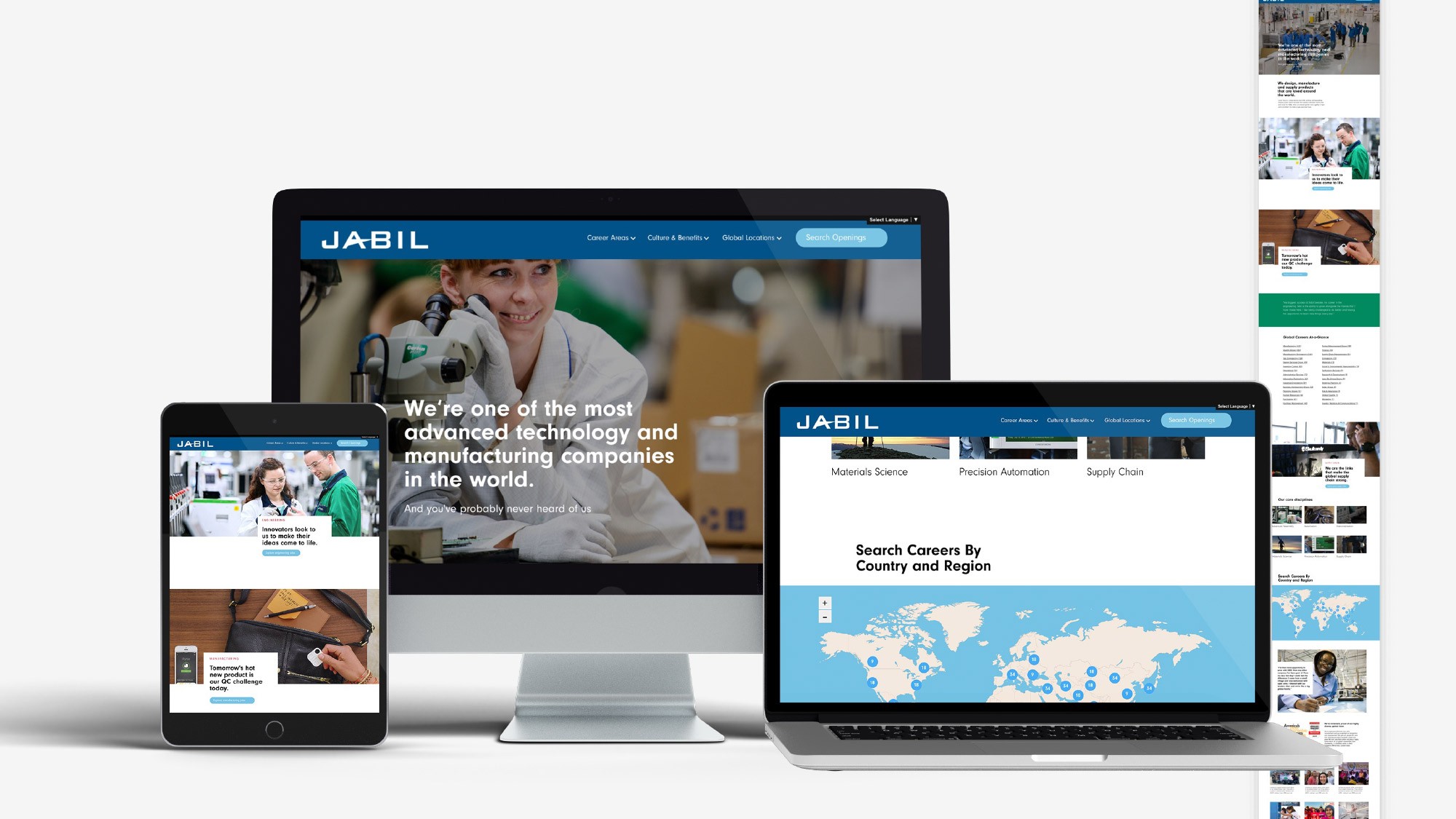
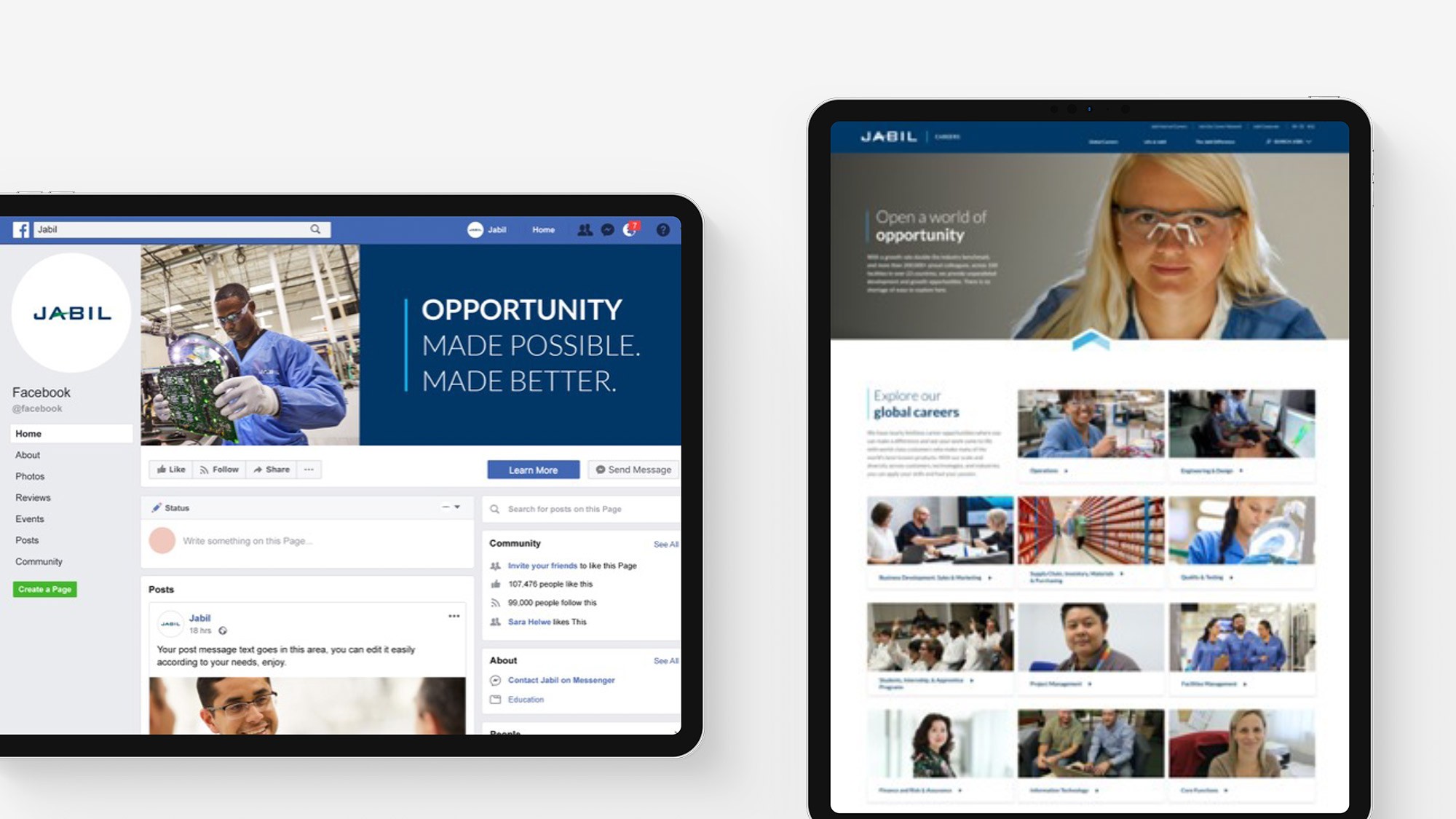
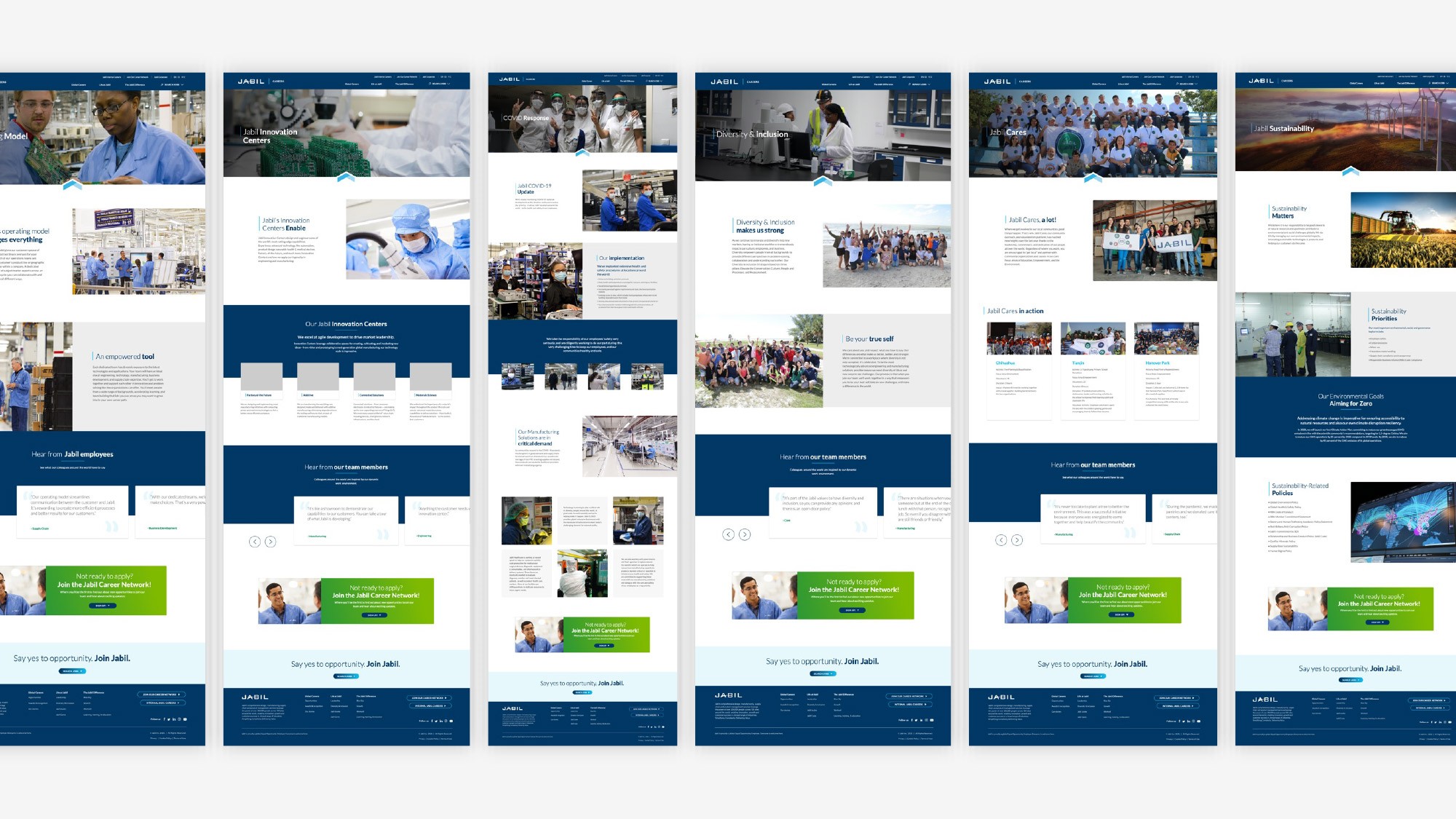
The career site was rebuilt from the ground up — cleaner, more confident, and meaningfully more global in both ambition and execution. The site launched in three languages: English, Mandarin, and Spanish, with IP-based language detection routing international visitors to the appropriate experience. For a company competing for engineering and technology talent across 30 countries, that architecture was itself a signal — this is a place that takes its global workforce seriously.
The content was organized around scale and substance: the breadth of career areas across engineering, software, manufacturing, and operations gave candidates a sense of the company's reach without requiring Jabil to name a single client. The work cell model was explained for the first time in language designed for job seekers rather than internal operations teams — what it is, how it works, why it accelerates careers for people who commit to understanding it.
Real employees, global locations, an interactive map showing the depth of Jabil's footprint, and an awards and recognition section that made the case for employer credibility without relying on brand name recognition. The visual language — navy, clean, professional — stepped up from the generic tech employer aesthetic without overreaching into territory the client wasn't ready to occupy.
The Result
Jabil entered the engagement largely invisible to the talent audiences it needed most. It left with an employer brand platform credible enough to compete — a career site that reflected the actual scale and sophistication of the organization, a global content architecture that worked across languages and markets, and, for the first time, a clear explanation of what made working at Jabil genuinely different from working anywhere else.
The most advanced technology company you’ve never heard of deserves to be known. This was the beginning of that.