
Aramark
Start entry level or C-suite, supported just the same
Focus:
Employer Brand Transformation & Value Strategy Development
Key Elements:
Decision-Dynamics Research, Creative Direction, Content Strategy, UX Design, Career Site Reinvention, Storytelling.
The Challenge
Aramark operates across nine industries in 19 countries with more than 247,000 employees — food, facilities, uniforms, and everything in between. That scale and diversity are genuinely impressive. It's also, from a talent attraction standpoint, a problem. When you span that many industries and career types, the instinct is to say everything to everyone. The result is a brand that says nothing to anyone.
Early conversations pointed toward employer brand, with a significant need for a reimagined career site experience/ That was what they wanted. But what they really needed first was clarity — a clear answer to the question at the center of any Value Strategy engagement: what would matter to a great candidate, why would they want to work here, and what would make them stay?
Finding Value That Was Already There
We started where we always start — with the people already inside the organization. Through structured interviews with employees across different industries and career paths, we weren't looking for what people said they liked. We were listening for the decision-drivers: what signaled a quality employer, a quality job, a better quality of life. What moved people to engage? And what was valuable enough to make them stay. We also wanted to know, as honestly as people would share, what they'd tell someone on the fence about applying.
A pattern emerged — the kind that only surfaces in one-on-one conversation. Across every industry and role, Aramark employees described the same feeling in different words: the ability to move. Laterally. Vertically. Across functions and geographies. The organization's complexity, which looked like a liability from the outside, was actually its most undervalued asset.
Many companies claim to offer growth in any direction. What we found at Aramark was that people believed it — and the belief had roots. It wasn't just policy. It was visible in people-leaders who coached, in resources that were actually accessible, in colleagues who had grown from wherever they started. Not perfect everywhere, but widespread enough to be real. Widespread enough to be cultural.
And here's what made it strategically significant: even employees who weren't satisfied with their starting compensation described trust in what was ahead. That's not a messaging win. That's identity value — the kind that drives decisions and retention in ways functional benefits never can.
That insight became the strategic foundation. Personal and professional growth wasn't a talking point at Aramark. It was the connective tissue running through the entire culture, proven in the field, across domains, and consistent over time.
From Strategy to Experience
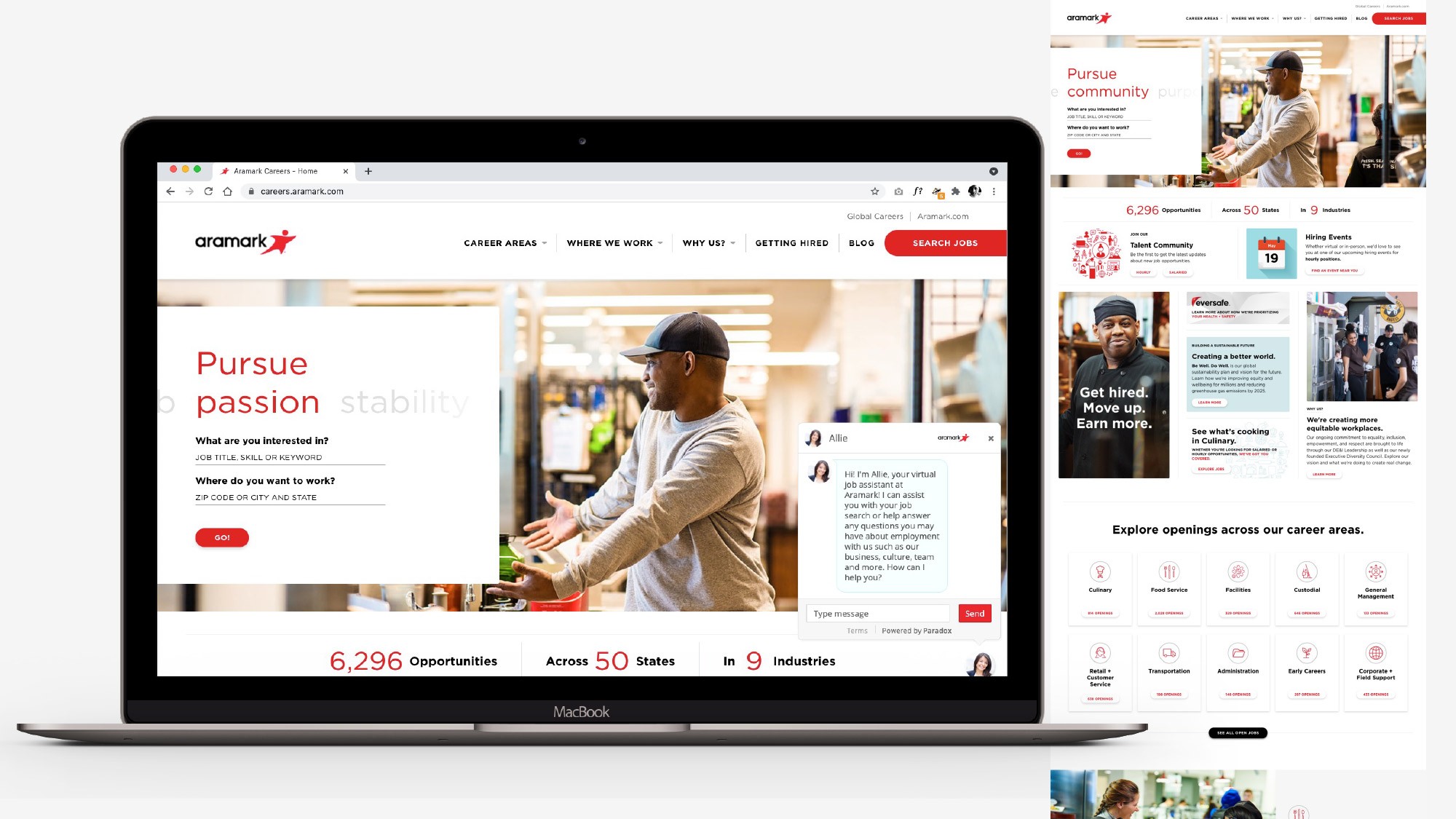
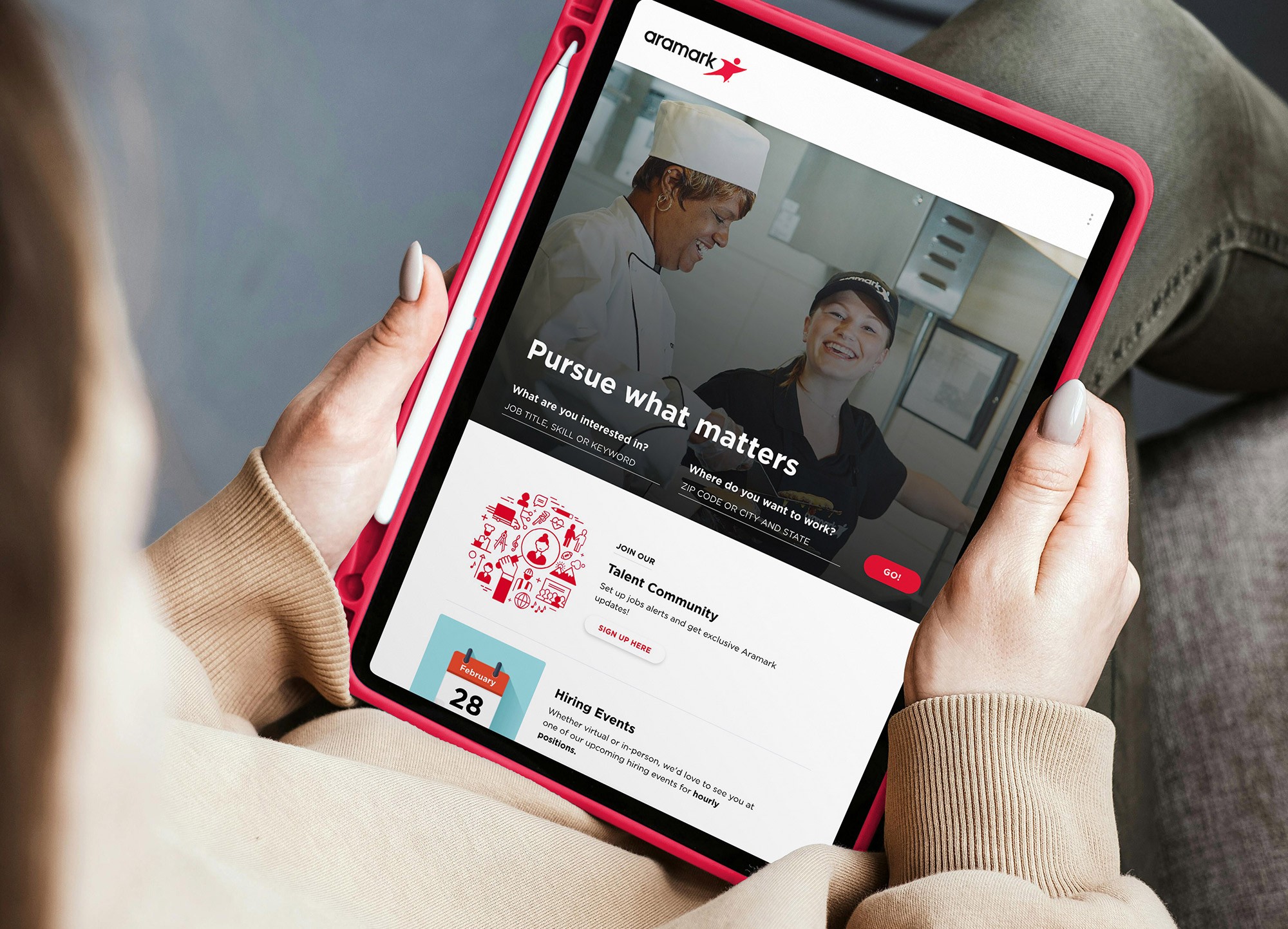
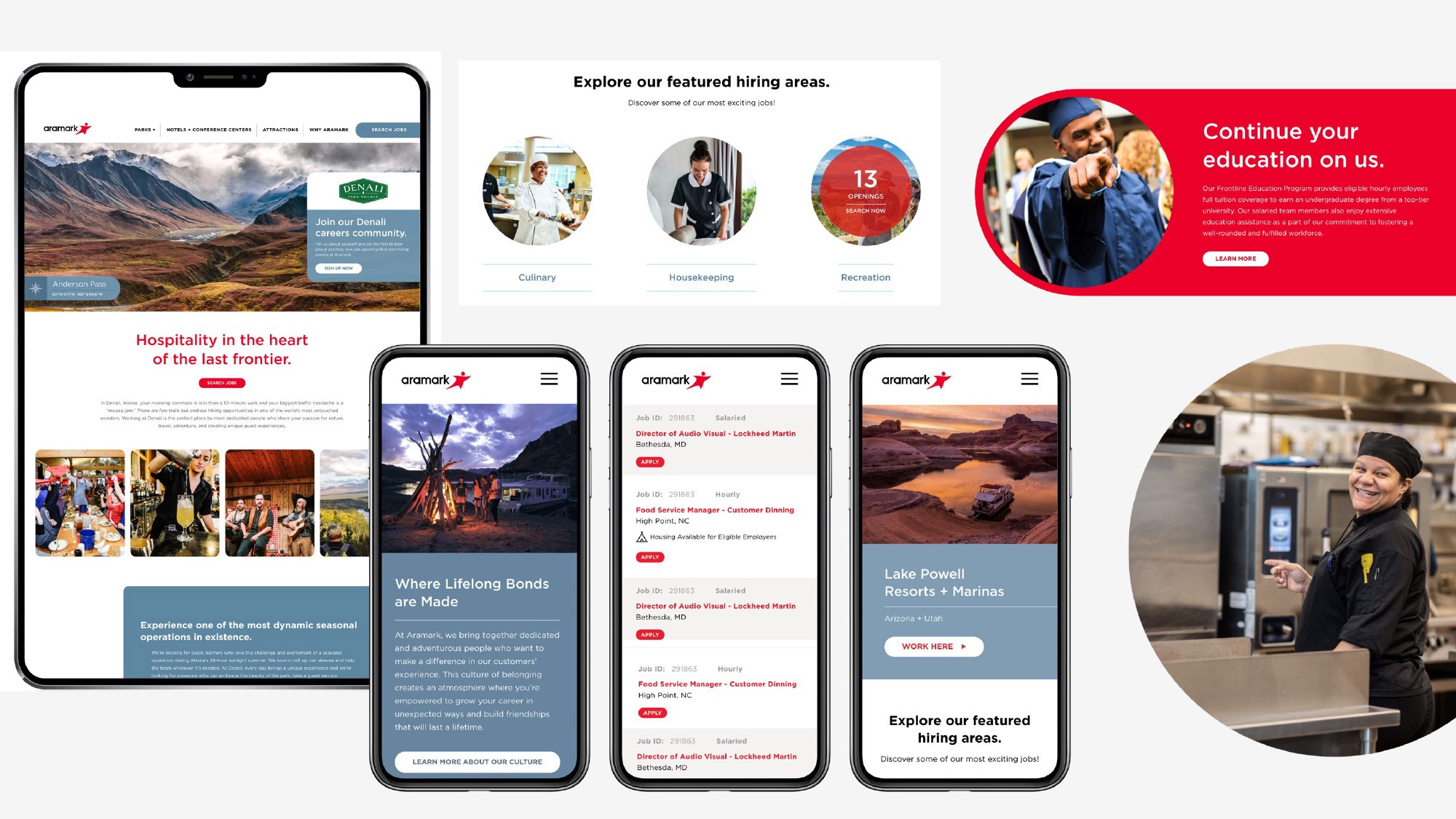
Like a tourism site for careers — that's the best way to describe what we built. The career site wasn't a job board with a coat of paint. It was the brand's road map, a virtual tour through the inner workings of Aramark's employer brand. Visitors had a clear map of interesting destinations, not just a list of open requisitions. The functional components — job search, filtering, applications — were state of the art and frictionless. But the experience surrounding them gave candidates a real sense of what kind of place this was and where they could go within it.
Because the employee voices that shaped the strategy were too valuable to leave off the page, we built a blog component that put real stories front and center — turning transparency from a buzzword into an actual design decision.
The Result
When what a company says matches what people actually experience, the right candidates self-select in — and the wrong ones self-select out. That's not good employer branding as a concept. That's the system working as it should.
For Aramark, aligning their external narrative with the lived reality of their workforce produced an employer brand experience that did more than look better. It communicated honestly, attracted more qualified applicants, and gave a 247,000-person organization a single, credible answer to the question every candidate is really asking: is this place worth my career?